

The Gear
I have lots of outdoor gear - from 10 year old + gear I got in Aldi to top of the range ‘Rab’ brand stuff I handed my wallet over for. I have learned quite a bit over the years, not so much the technical stuff about synthetics and fabric denier, permeability and R-values etc but rather what works for me in the different outdoor environments I have found myself in. You know, in spite of the large quantity of gear that I have, I generally find myself wearing the same few items over and over - gear I know and trust.
So. I am building this page where I will, over time, record the gear I have, how I got it and how effective it has been for me. I won’t be focusing on brands or price but purely on my experience of the items - good and bad - and what situations I use it in. I will start with the feet up - boots and socks, then lower body, top half and then gloves and then other accessories including bags, tents and all the paraphernalia.
Hopefully you will find some of the info useful.
Shoes and Boots
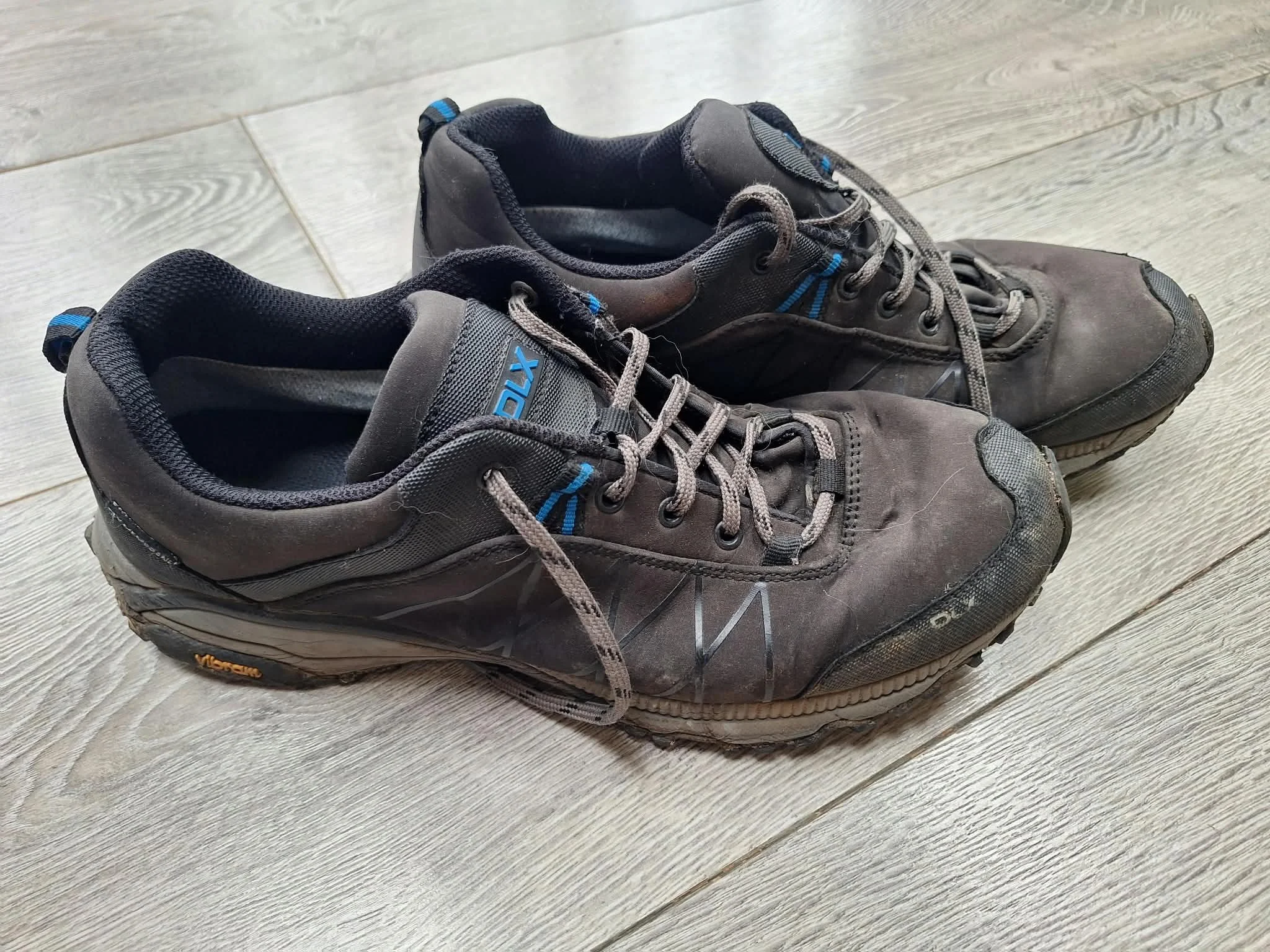
First off, I have a bog standard pair of trail runners. They are showing their age as you can see and are not a particularly fancy brand. I used to do a bit of trail running, but haven’t for a few years now, so really all I did was repurpose these to use on certain walks and hikes to get the value out of them. I would generally use these on reasonably easy and dry terrain - forest paths, way-marked trails etc. If I am going to be out for multiple hours I probably would not use them as I bump up to the approach show below. Typical places would be Killiney Hill, Bray Head, Tibradden, Fairy Castle, St. Kevin’s Way in Wicklow etc. If it is going to be very stony, wet or muddy, then these are not my go-to.
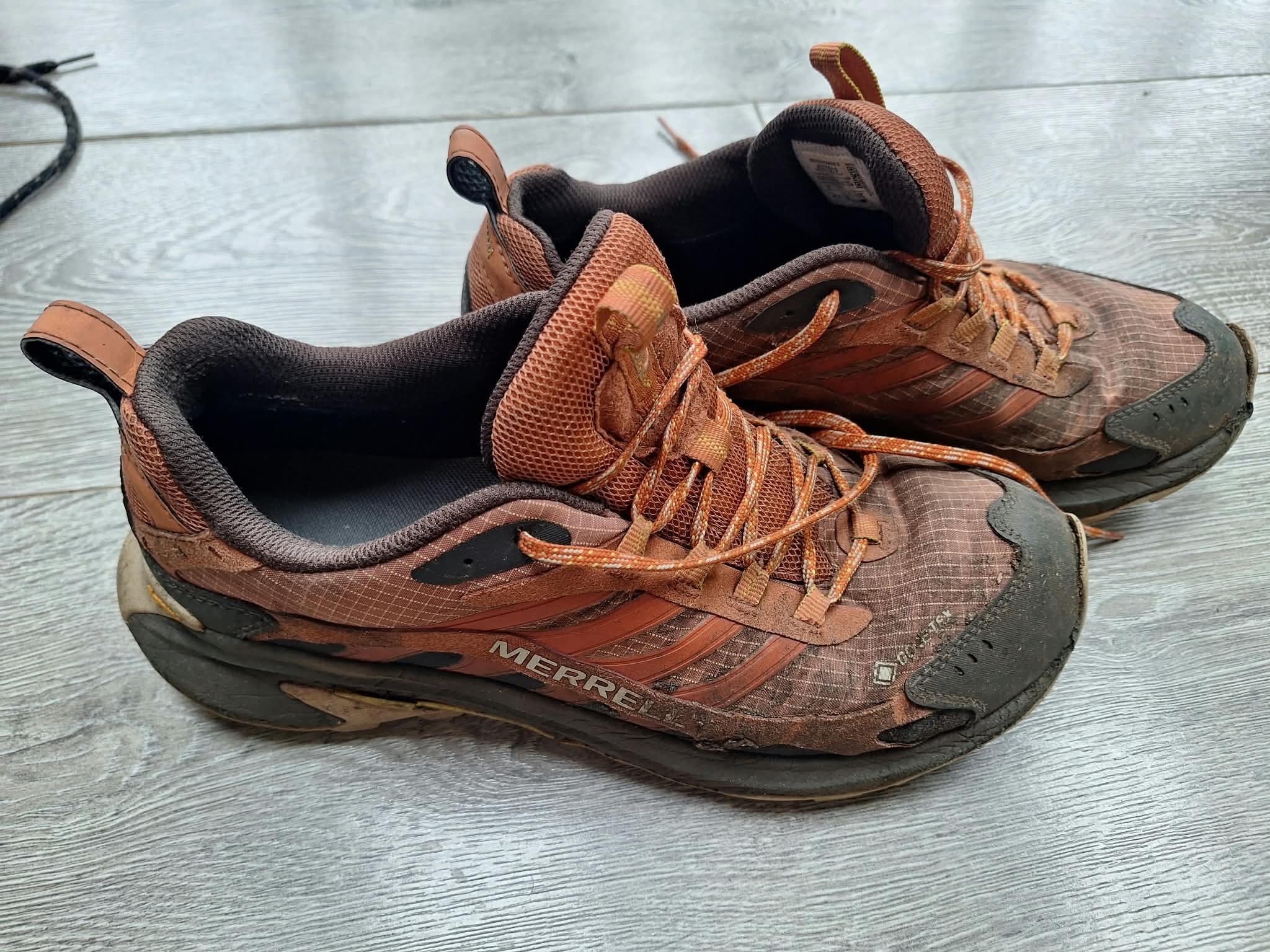
This is a pair of Merrell approach shoes that I got a couple of years back. In general, these are my go-to hiking shoe unless conditions dictate otherwise. They are light and comfortable and heavily used (I do need a new pair as the soles are worn and there a couple of splits) and as you can see I am not great at keeping them clean. Tougher than the trail runner, I wear these where it is generally dry but perhaps stony, rugged and dusty. In particular I have worn these in the Atlas mountains and Kilimanjaro and countless places throughout Ireland where it is not too boggy or wet. I have used them extensively in the Alps on dry ground.
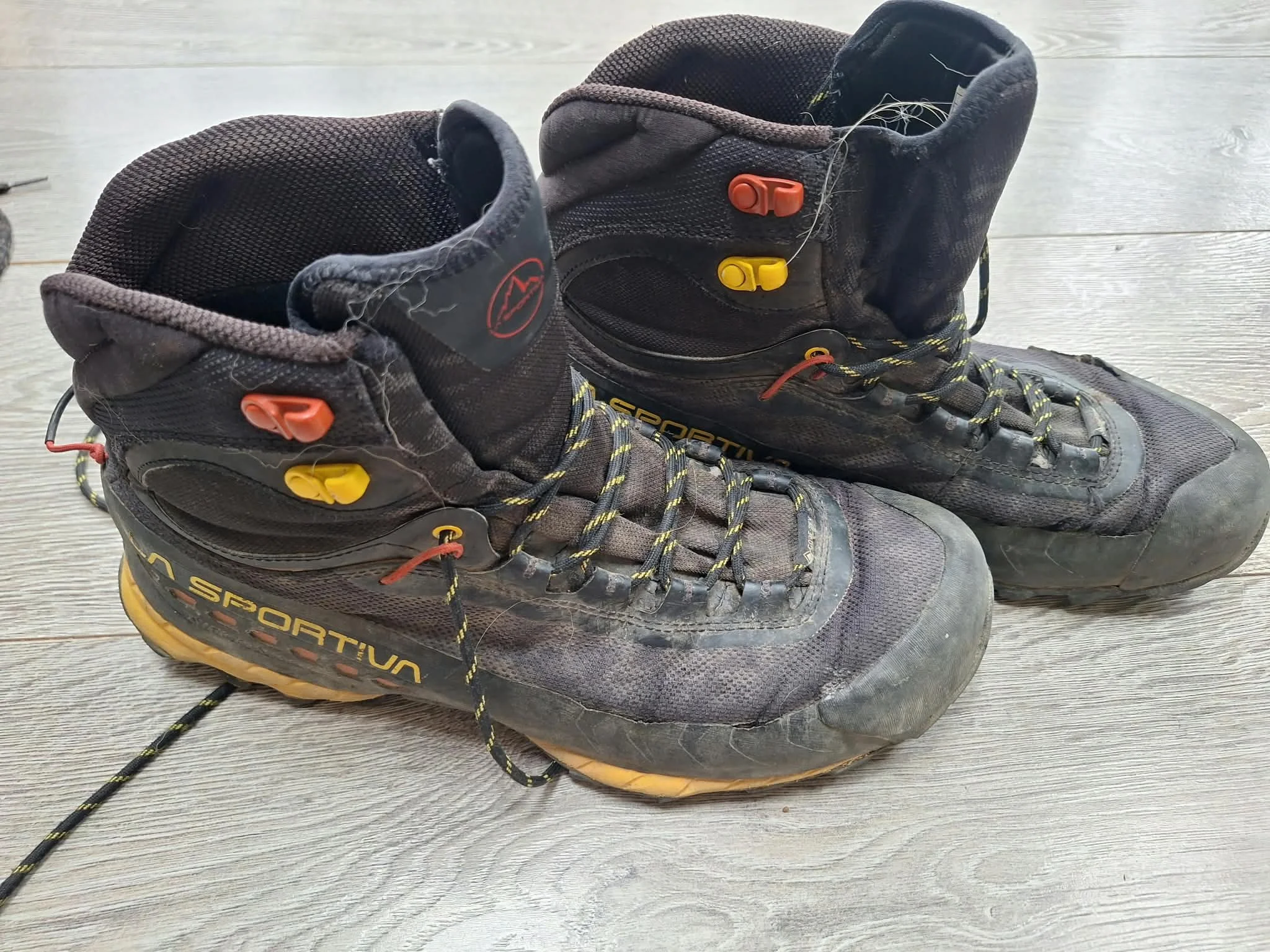
These are my primary hiking boot from La Sportiva - I ordered them online a couple of years back and just went up a size - they fit me like a glove. These are my go-to when I know I may be going off-trail, conditions are boggy and wet or in situations where I don’t know what the terrain is going to be like or I know it is going to be quite varied. Again, you can see that my attention to their upkeep is poor! I must note that they have split a little bit at the seams and are only 2 years old, but to be fair they have got a lot of use. I use these extensively including multi-day treks to Island Peak (Nepal) and in high mountains in Norway.
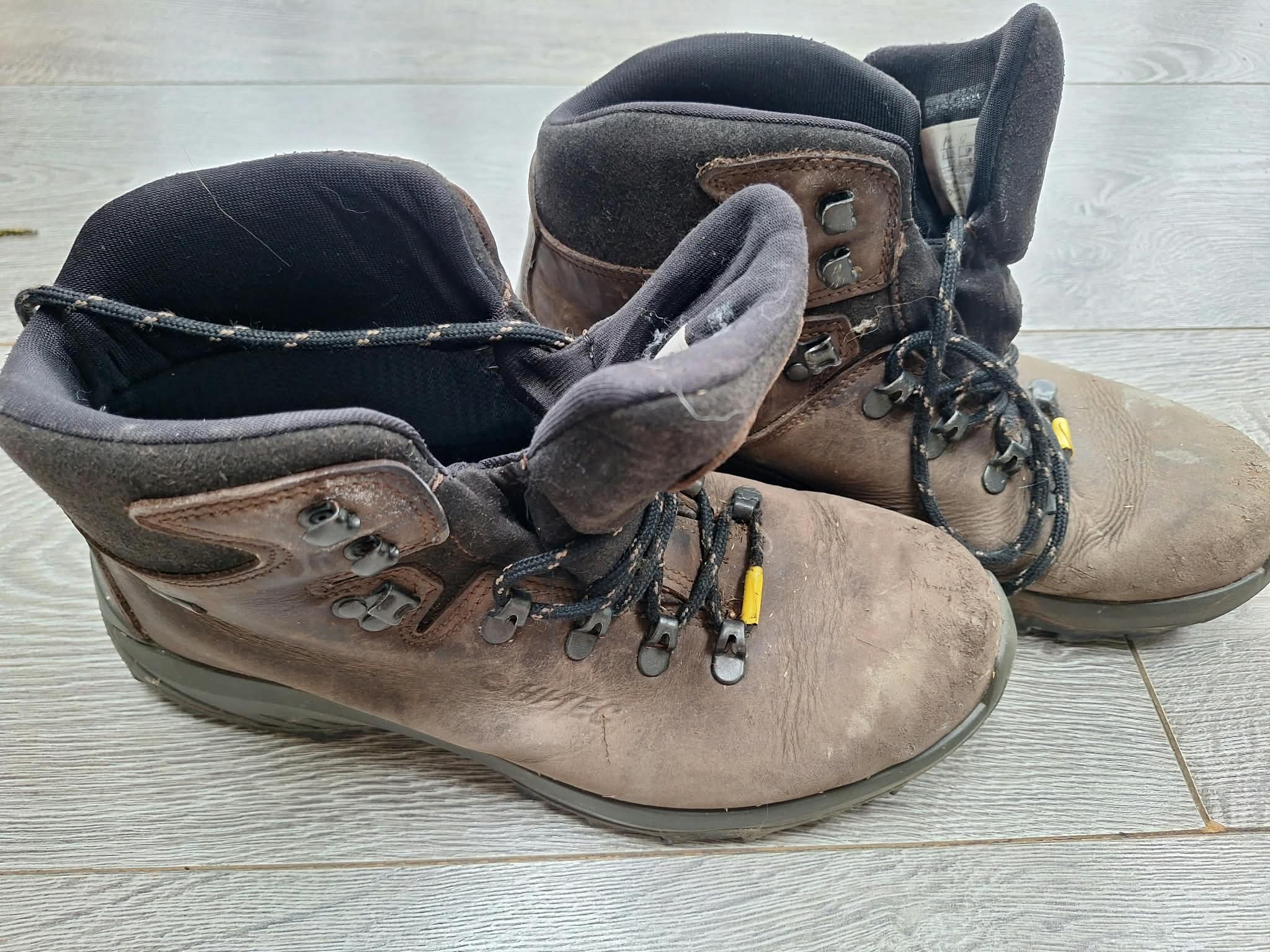
I assume everybody has a soft spot for their oldest remaining boots and these Hi-Tec boots are where my soft-spot is. These were (until I got the La Sportivas above) my go-to and whilst I don’t use them much now, I have full faith in the job they will do if called upon. A no-fuss boot and even though they are a few years old show no real signs of wear and tear, bar a bit of scuffing. I would use these in the same situations as the La Sportiva and have had them on trips to Nepal, TMB and every wet and boggy hike you can mention in Ireland!
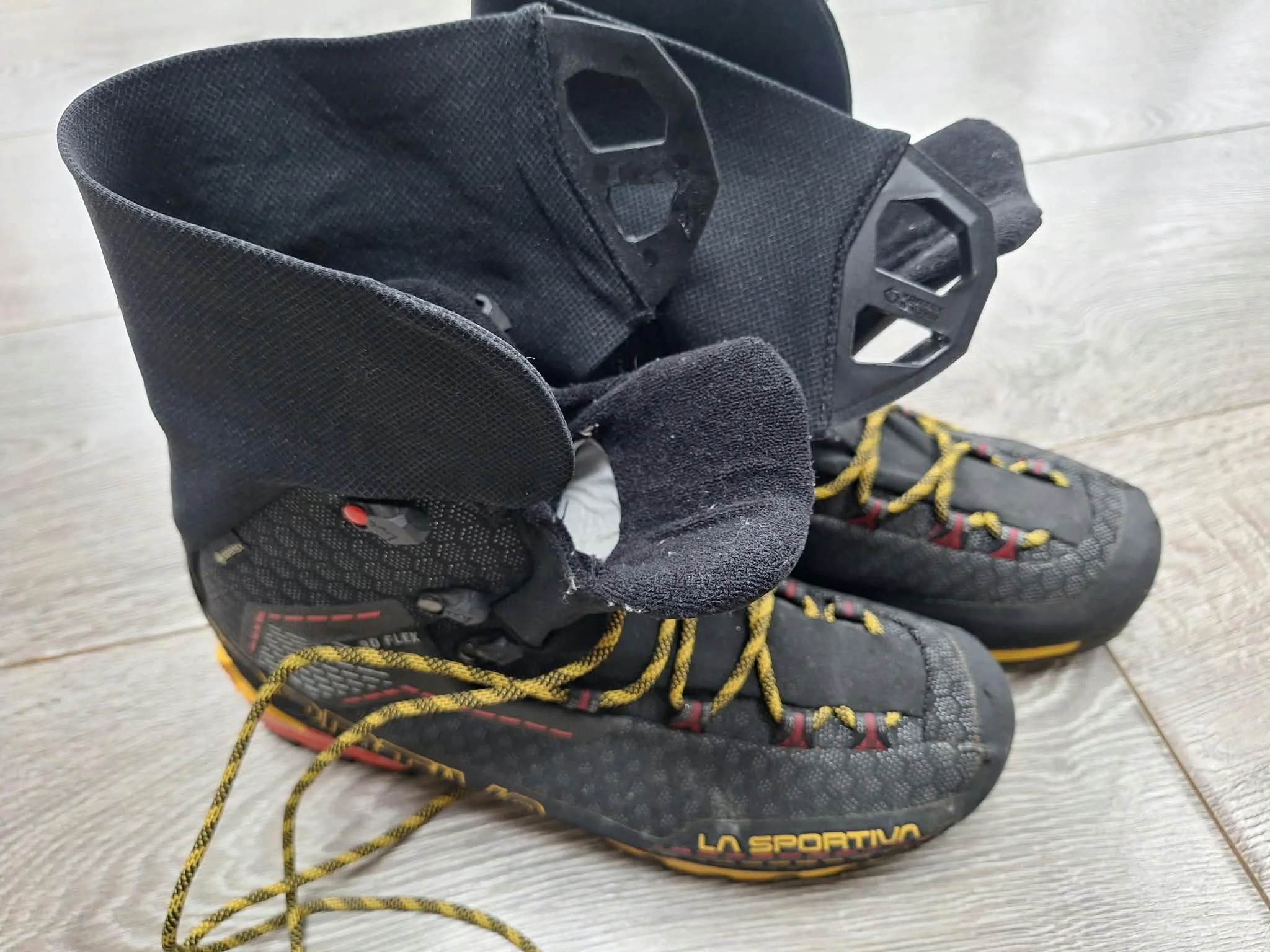
These are the new kids on the block - La Sportiva Trango Pro mountaineering boots. Bought specifically for a trip to the Alps in 2026. As per my other La Sportiva boots, I bought them online and went up a size and they appear to fit well so far. These are exclusively for climbing, touring and expeditions where a rigid and tough boot is required and there is likely to be glacier walking with crampons, with which they are fully compatible. I’m not an expert, but they are probably more a 3 season boot and if I was mountaineering in true Winter conditions they may not be sufficient. They are not a high-altitude mountaineering boot either, but worked well for me up to 4500m in the Alps.
Socks
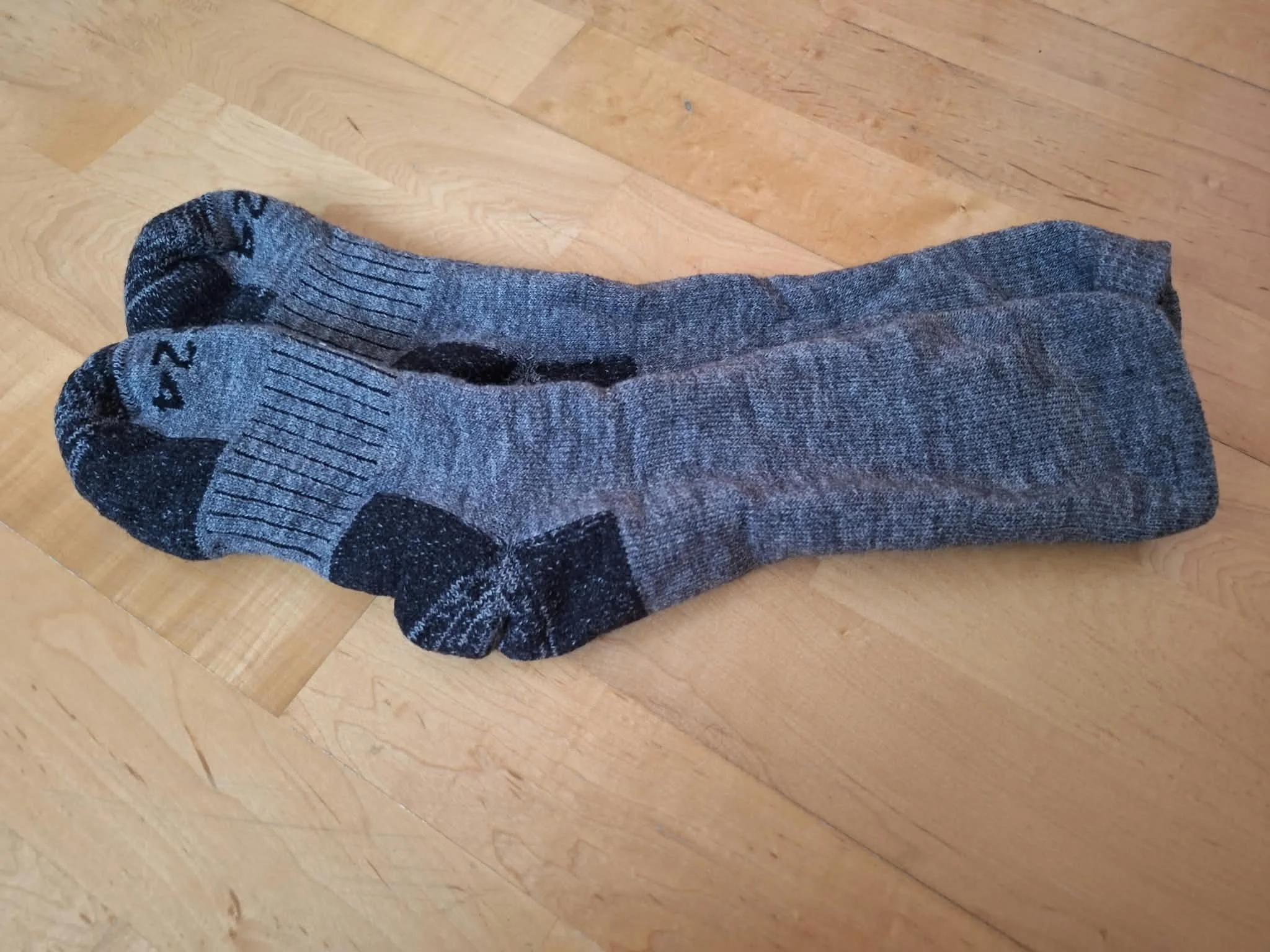
What can you say about socks - well quite a lot actually if you look at some of the gear test and review sites online. For me I keep it simple - I have 3 types of socks - merino, liner and waterproof.
Merino wool socks - a variety of light, medium and heavy. They can be a bit pricey but are usually seamless and are great for getting the moisture away from your feet and so helping to prevent blistering. The density I wear is driven by the weather and the shoe/boot I am going to wear as the heavier they are then generally the better the insulation. I always carry a spare pair of socks with me just in case the feet get wet.
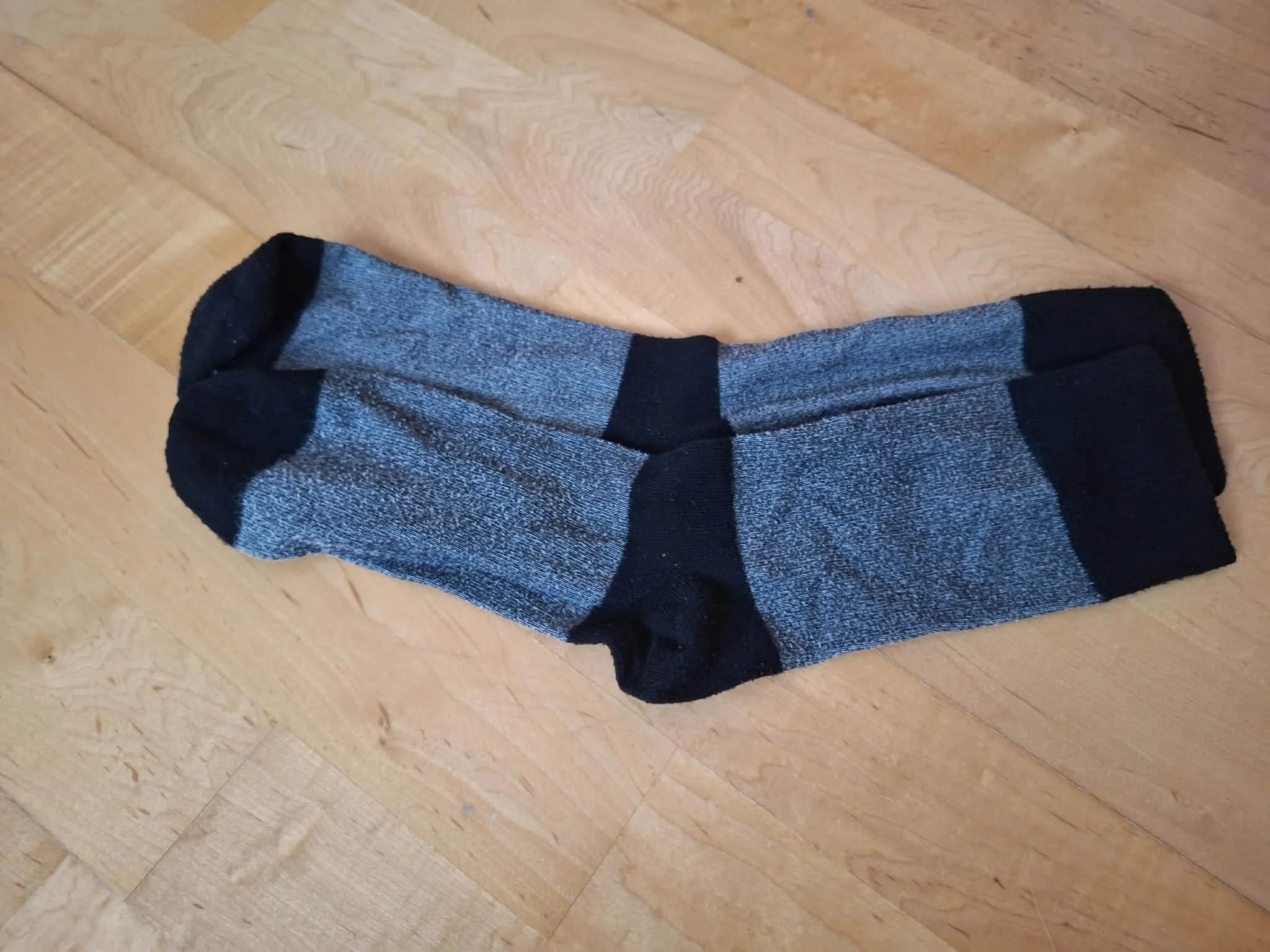
Liner socks are for wearing under your regular hiking socks for added comfort and warmth. I have never worn them like that but rather if I just need an ultra light sock when on a fairly easy trail with my trail or approach shoe. Indeed I have even worn these socks as regular socks as they are seamless, light and very comfortable. I got them for a high altitude trip to Nepal, but the weather and conditions didn’t warrant me wearing them.
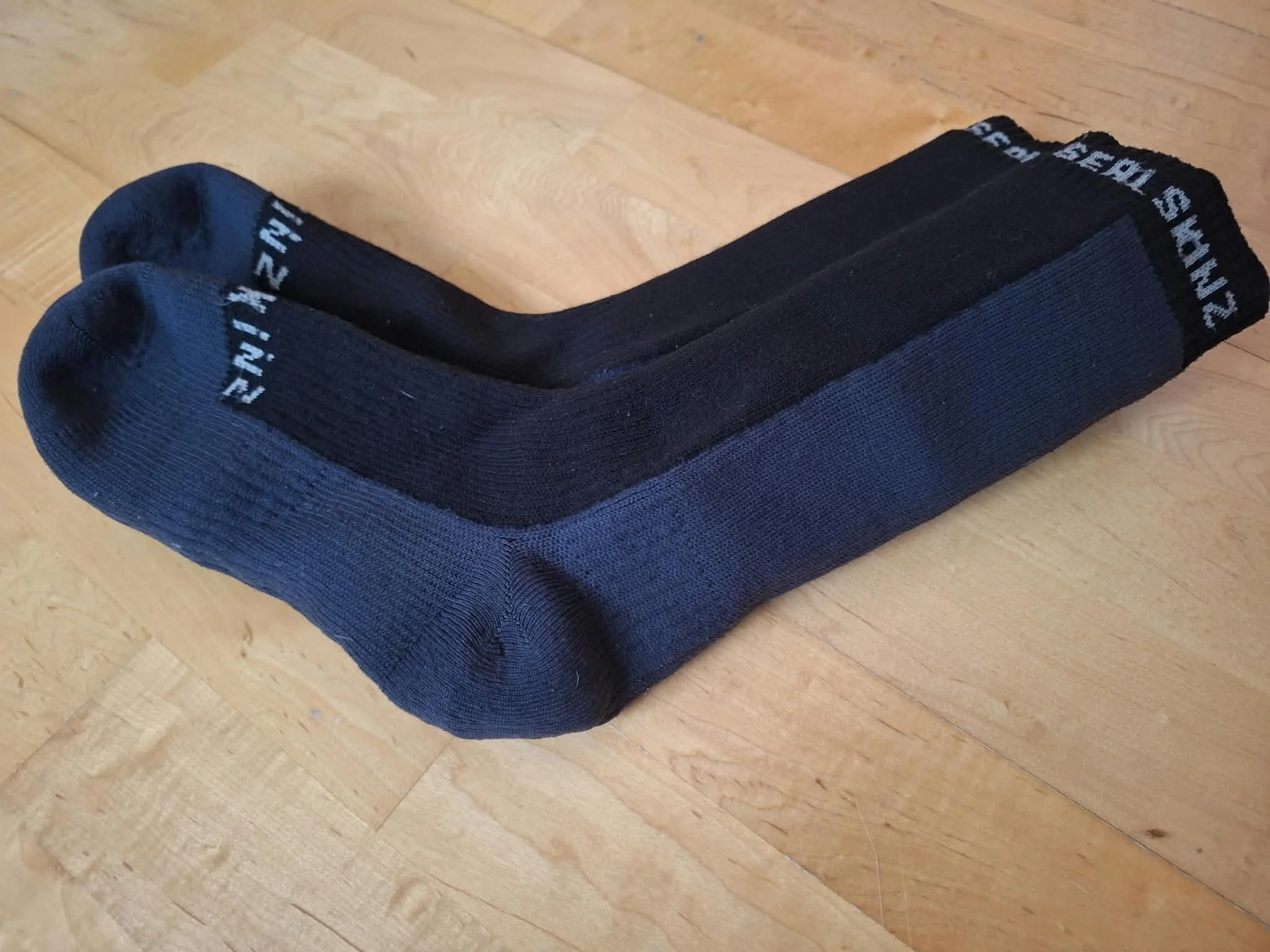
So I have one pair of water-proof socks that I was given as a present. These feel like regular merino socks with some sort of impermeable layer in the middle of the fabric. I have worn them a couple of times when I knew I was in for a day on the hills and it was likely to be very boggy and wet. They work - my feet remained dry - however they run hotter on me and my feet got a bit sweaty. Not a sock I would wear on every hike.
Lower Body
I don’t tend to run cold on my lower body, yet I have a large collection of layers and types of clothing that cover all eventualities - don’t judge me, but decide for yourself based on how your body functions, where and when you go as to what kit you need.
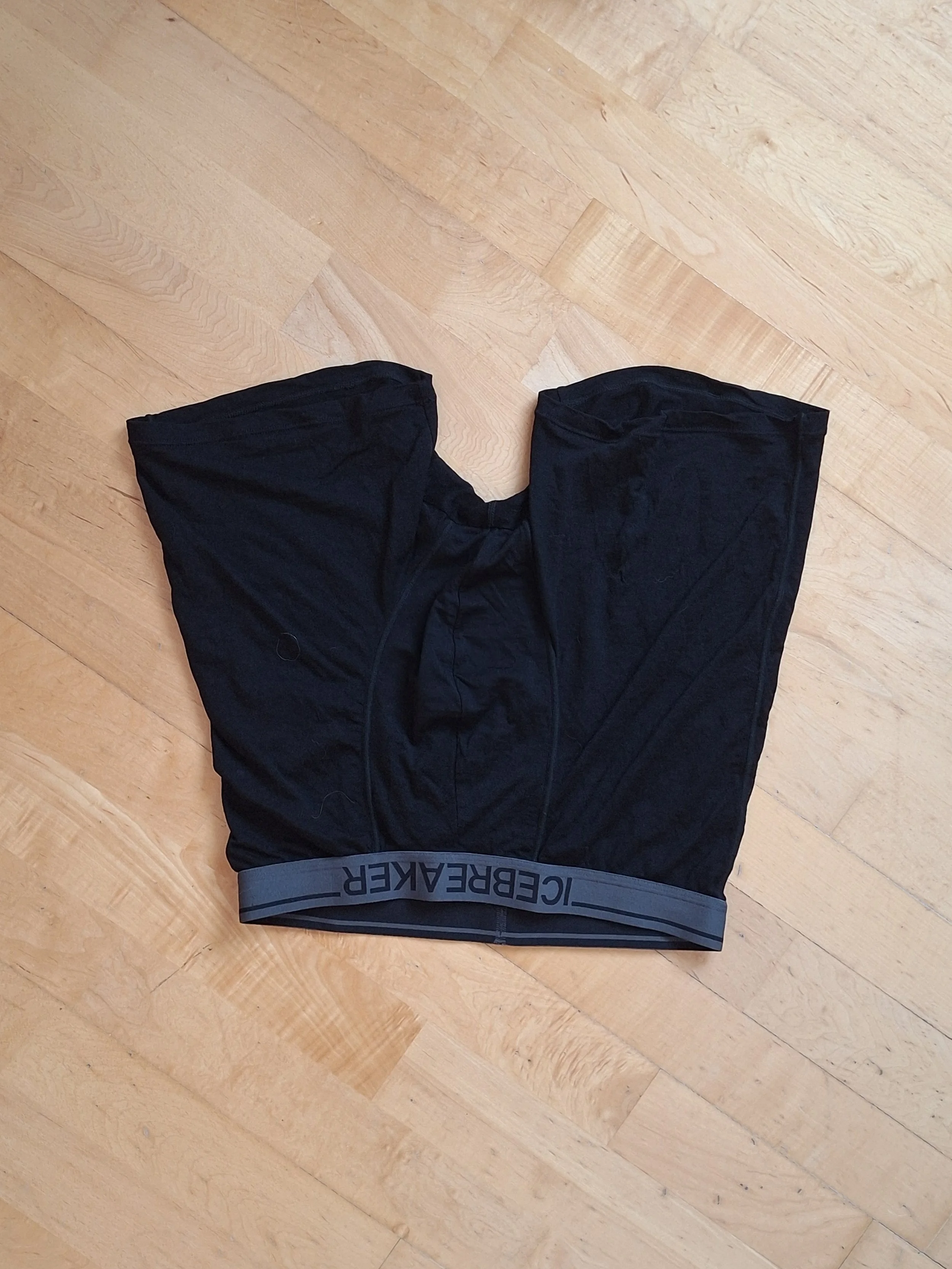
I never thought that I would be posting images of my boxer shorts on the internet! These are merino wool boxers manufactured by Icebreaker. I have a few pairs of these (not cheap) but they do a tremendous job down there in wicking away any moisture, keeping me cool and remaining in position - they don’t ride up my legs when hiking and trekking like I find normal cotton boxers do. Common theme here - cotton bad, merino wool good! I wear these pretty much on every and any hike and trek.
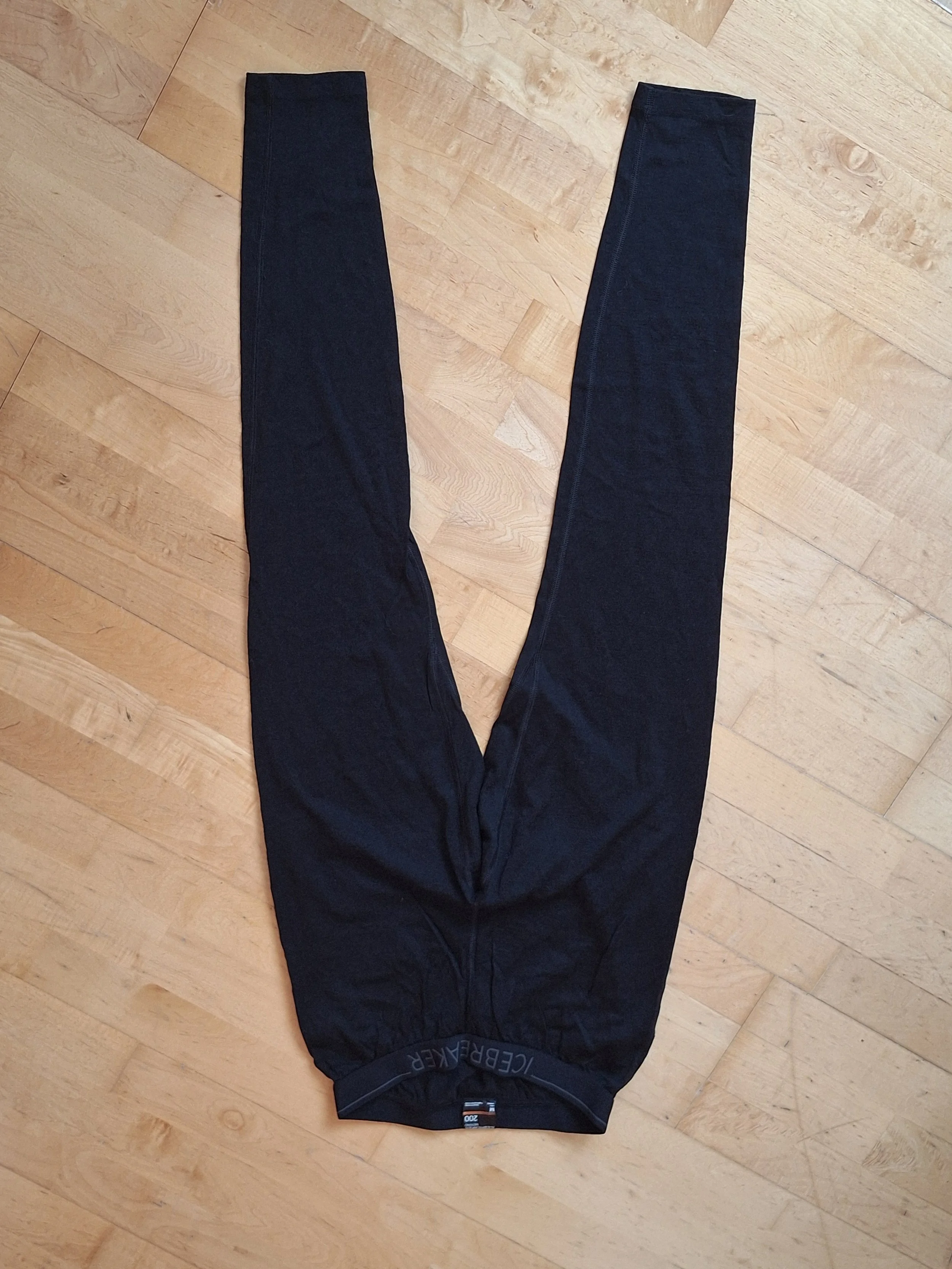
Base layer (long johns!) are again Icebreaker merino wool. I said I wouldn’t get into the technical stuff, but the warmth is based on the material thickness - mine are 200 g/m2. You can get them at higher and lower warmth - 200 seems to be the most common. Not exactly flattering on me as they show every bump and blob but they are worn under your hiking pants. I have only ever worn them once - summit night to Island Peak in Nepal (6200m) when it was a bit chilly. As I say, I don’t run cold in the lower body so they are generally left behind!
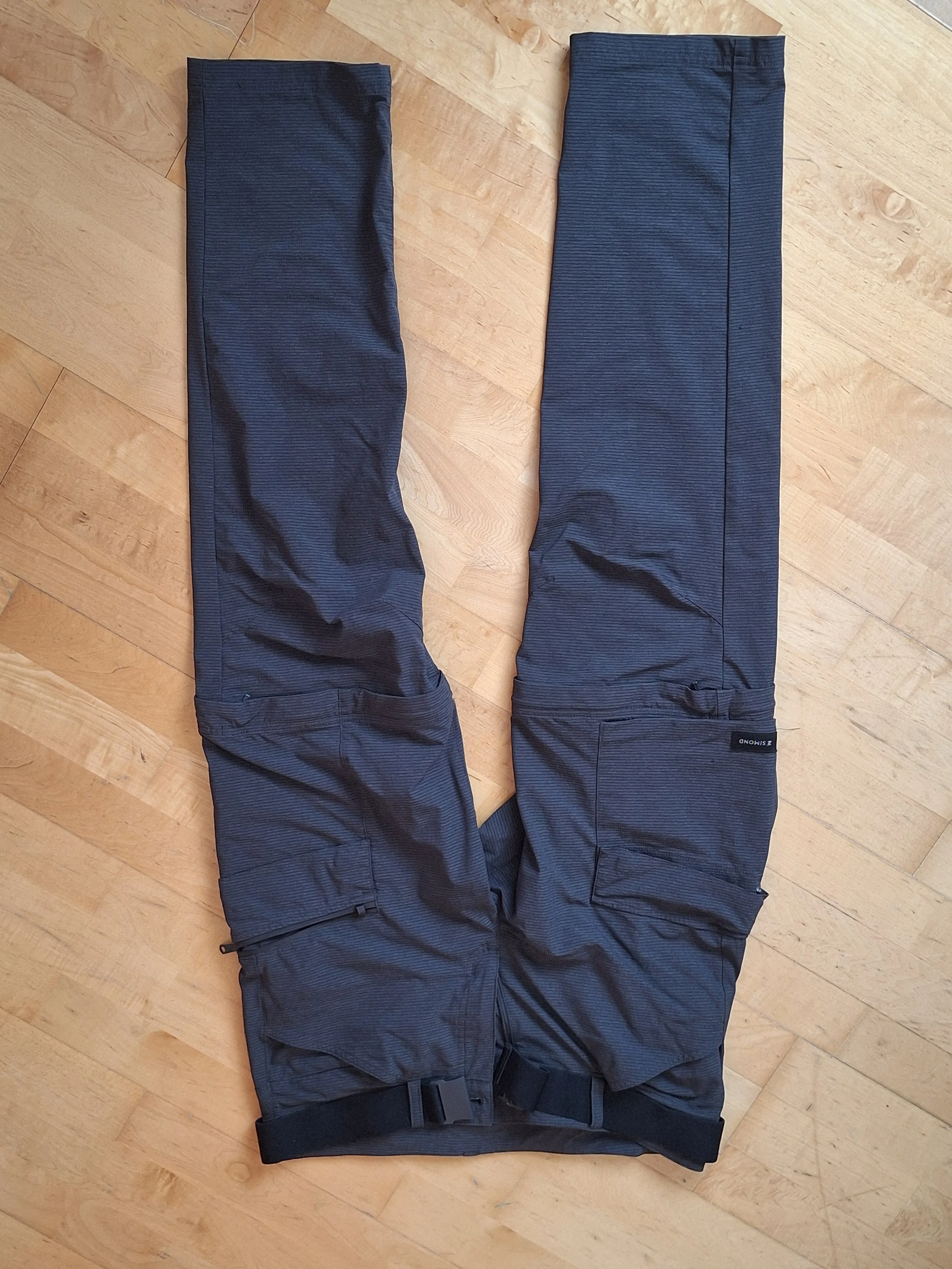
Standard hiking/trekking pant. Nothing fancy, I have several pairs of these all from Decathlon. All I look for are removable legs, so that I can wear them as shorts (which I actually rarely do) plus a few pockets - one or two with zips. 99% of the time I will be wearing these when out hiking including summit of Kilimanjaro. Made primarily from polyester they usually have a slight stretch and dry rapidly if they get wet.
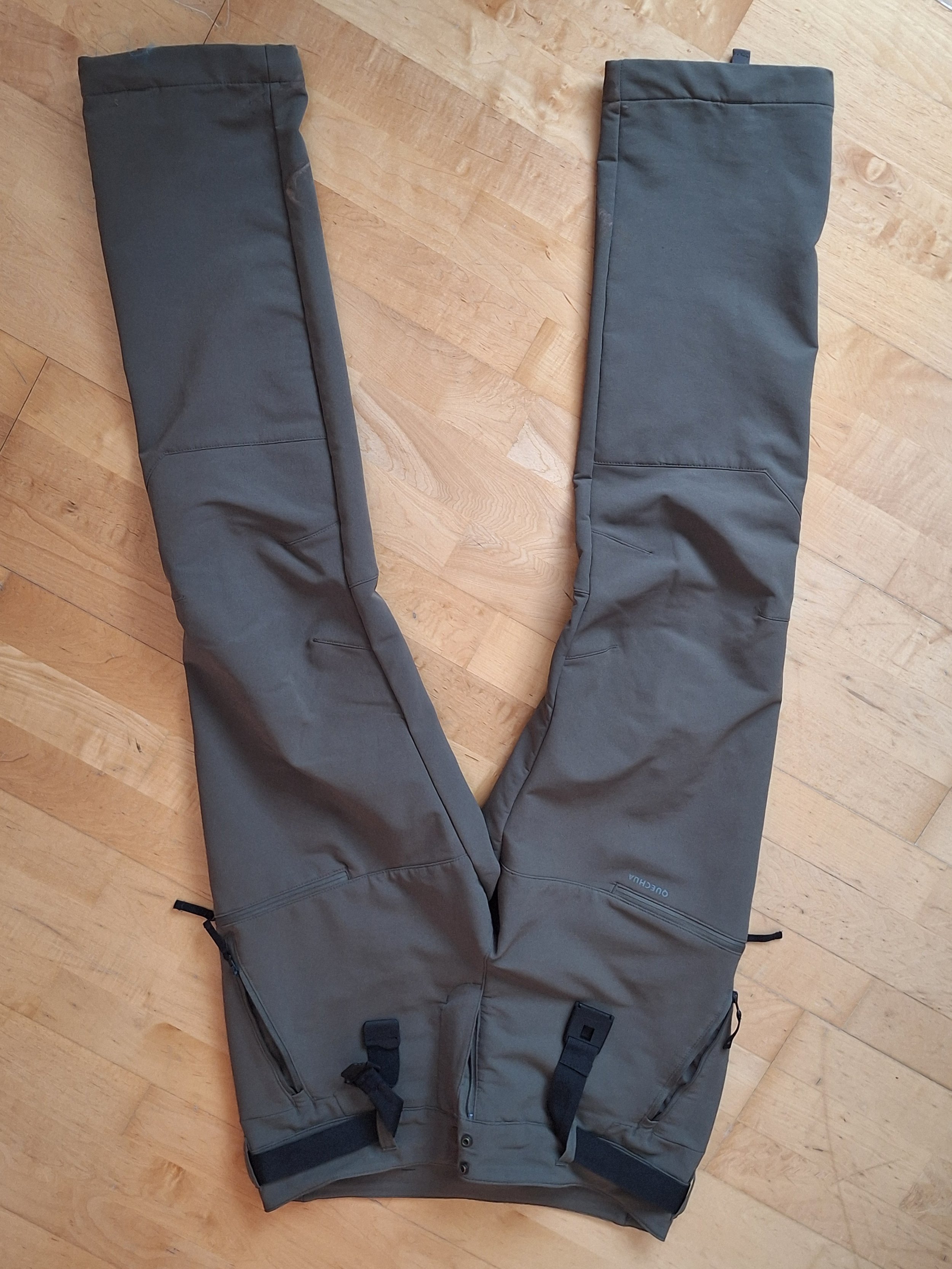
These I guess are my 4th season (Winter) hiking pants - they have a fleece lining. Again, nothing fancy, I got them in Decathlon, but if there is a nip in the air or some wind chill I might throw these on although base layer under the normal hiking pants would likely do the exact same job. Horses for courses and whatever your personal preference is.
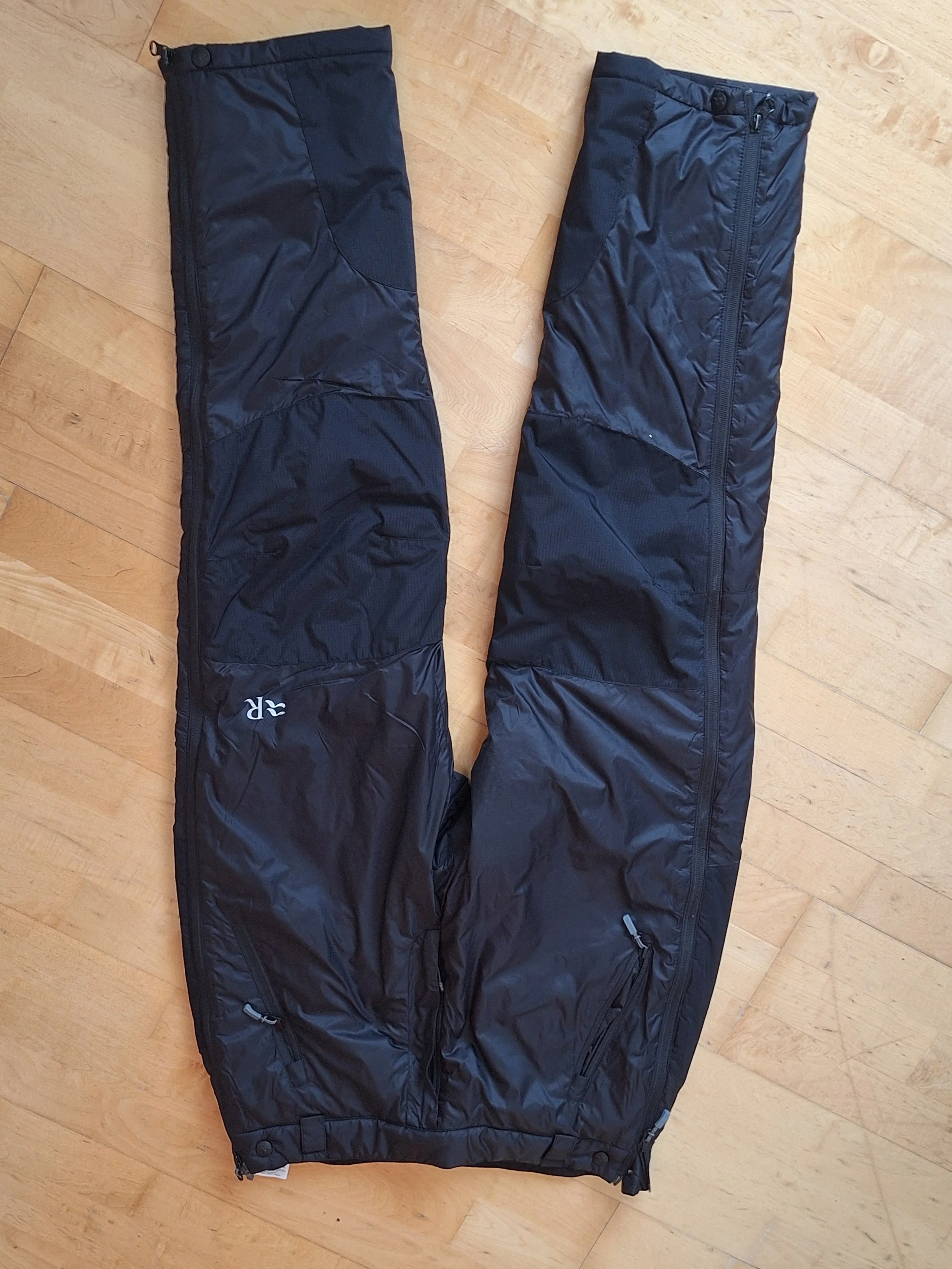
These are an insulated down (manmade) pant that I don’t think I have ever worn for any long period - I just overheat in them. They are Rab Photon, so not cheap, with fully zipped legs, so easy to get on and off, as you may likely have big mountaineering boots with you when using these. Made for extreme cold conditions - high altitude mountaineering and arctic or severe alpine conditions. I’ll hold onto them just in case!
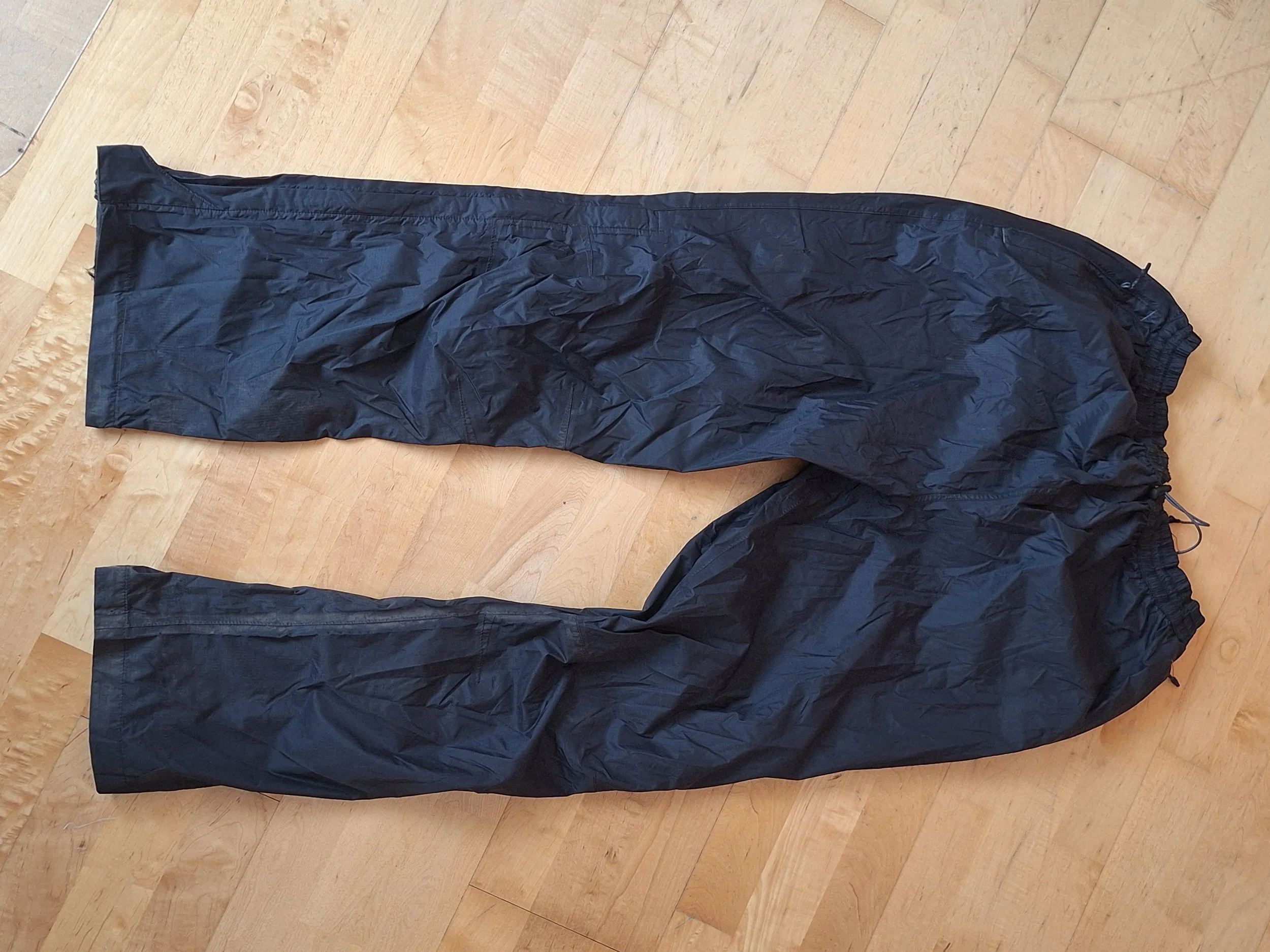
These are my standard waterproof layer. Three-quarter length zippable legs which make them easy to get on and off. When you are recommended to bring waterproofs, these are what you have in mind. Give good wind protection also and are somewhat breathable so that you don’t sweat a lot in very humid conditions. These were my go-to waterproofs until I purchased the pair below! In my case they are Craghoppers.
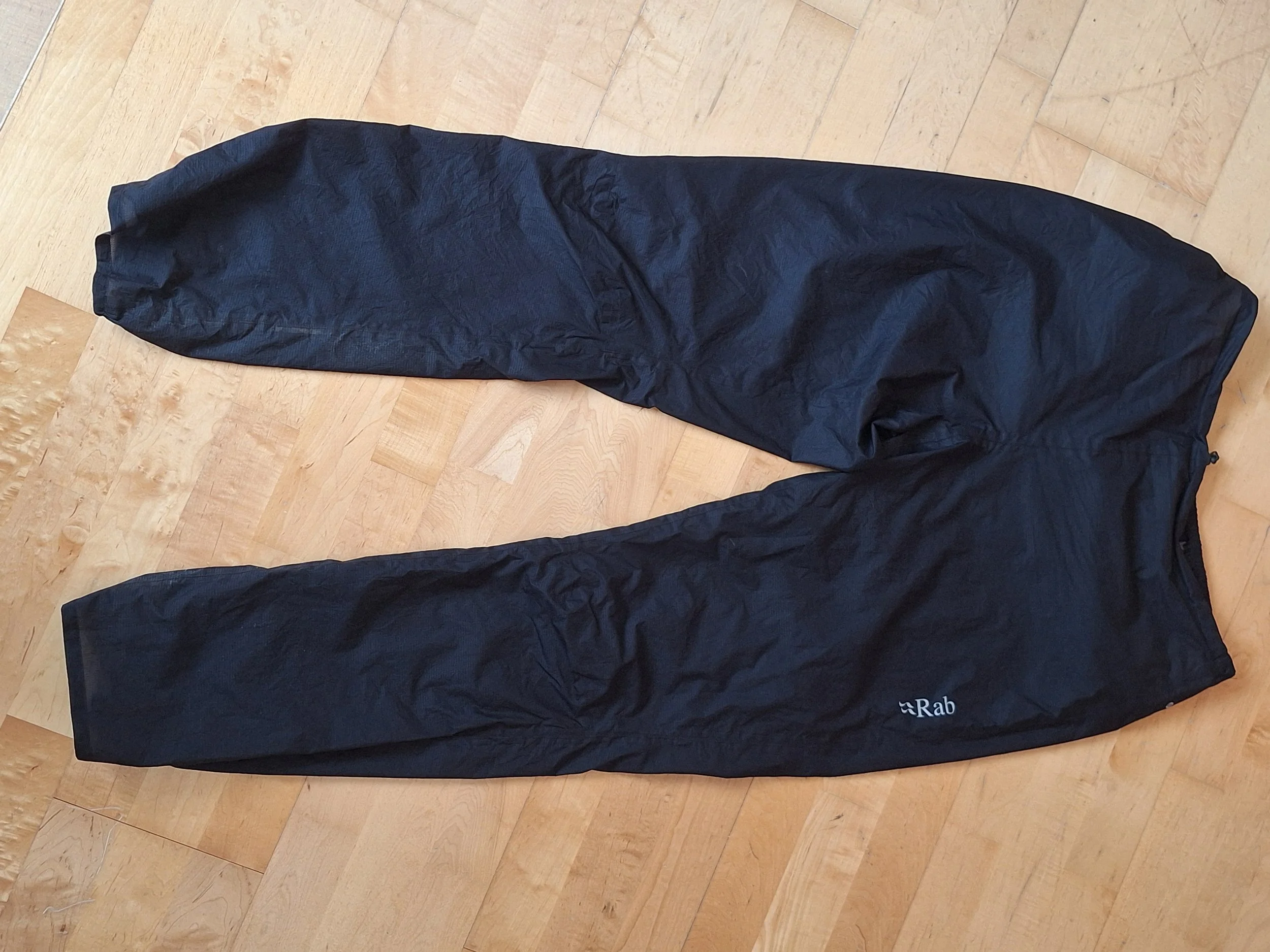
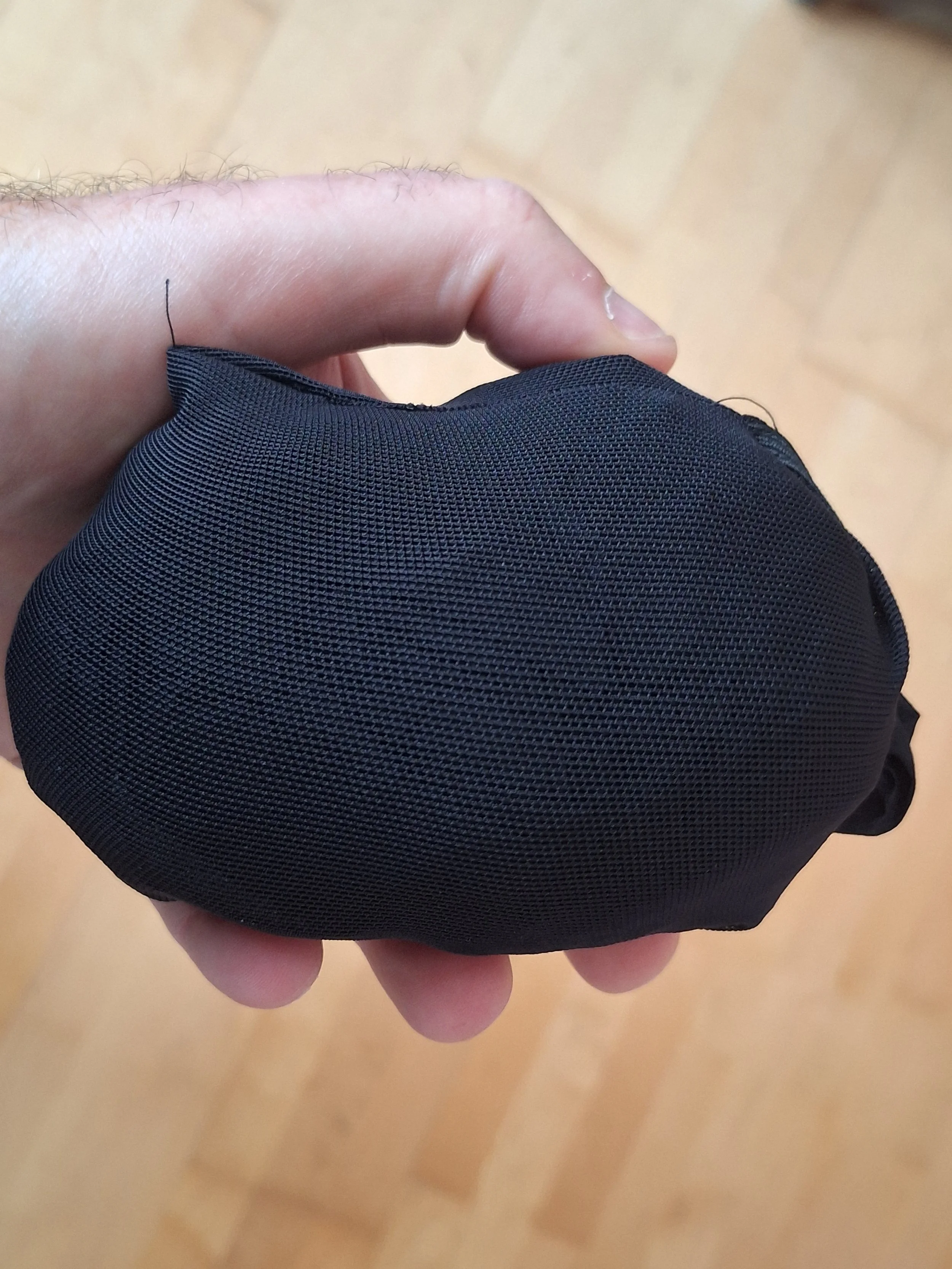
These are my Rab Phantom waterproof pants - they are like skin. Got them a couple of years ago and are my absolute go-to now for waterproof leggings. As you can see they fold really small and weigh grammes. They don’t have zips leg complications but are stretchable, so generally you can get them on over a standard hiking shoe or boot. They keep you dry and are very breathable. Can’t recommend these enough! Sadly, not the cheapest but worth the investment in my opinion.
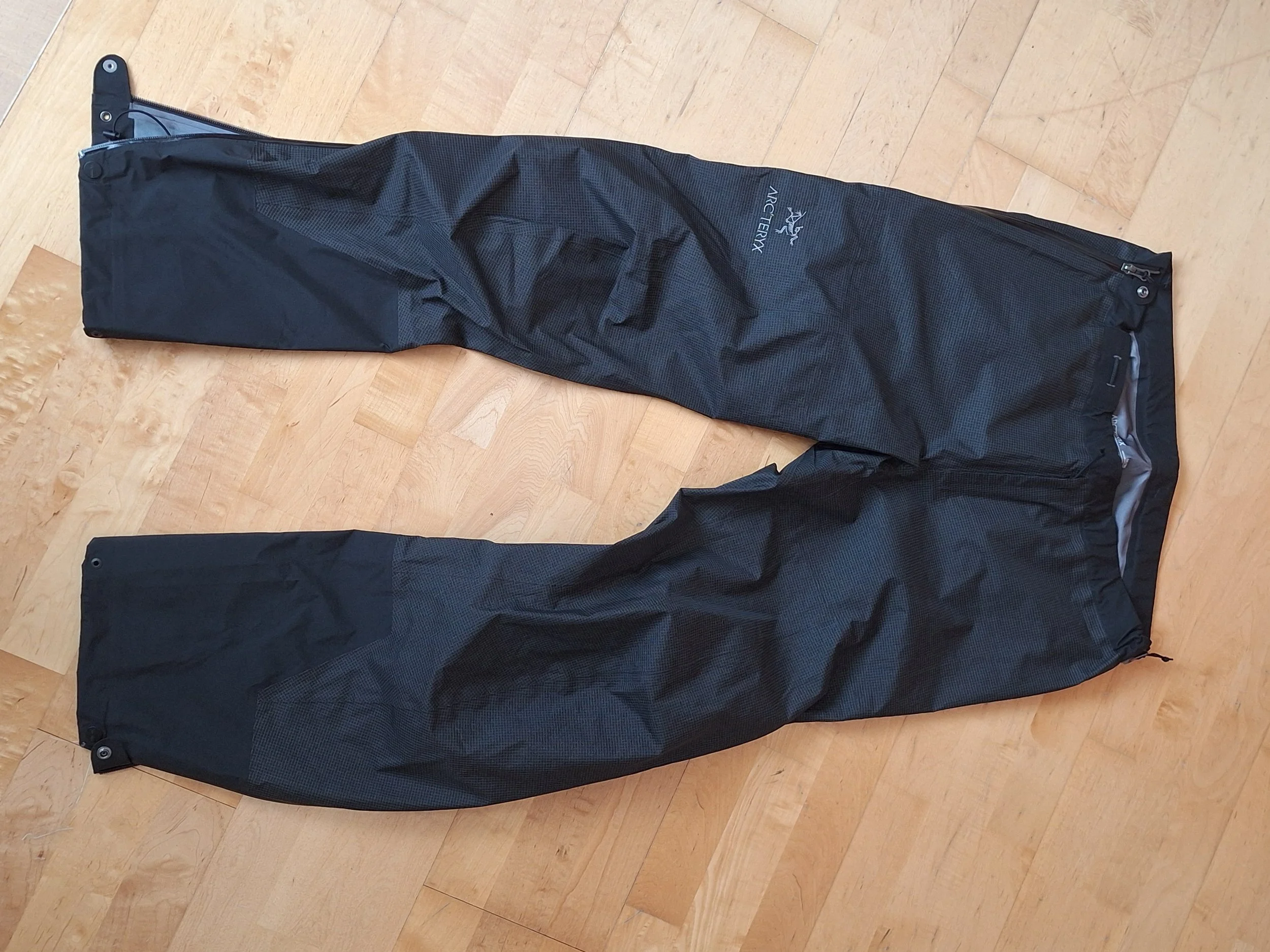
These are a hard-shell layer from Arc’Teryx. Fully zippable legs, so easy to get on and off. I do not believe I have ever worn these - they certainly are spotless! Suspect these were on a kit list for one or two expeditions I did, but never had the extreme conditions that would require me to go beyond normal pants and waterproofs. Offering strong protection against snow, wind and rain in more extreme places - like the insulated pants, I will hold onto them just in case! They are very light and probably useful in some of the sideways rain conditions we get sometimes in Ireland.
Upper Body
Like lower body, general rule is base layer, mid layer and outer layer. So simple! However, like everything there are many nuances. Of course, that does not mean that you will ever only have 3 layers on the top half of your body. In my most extreme case I had 5, or was it 6 layers?
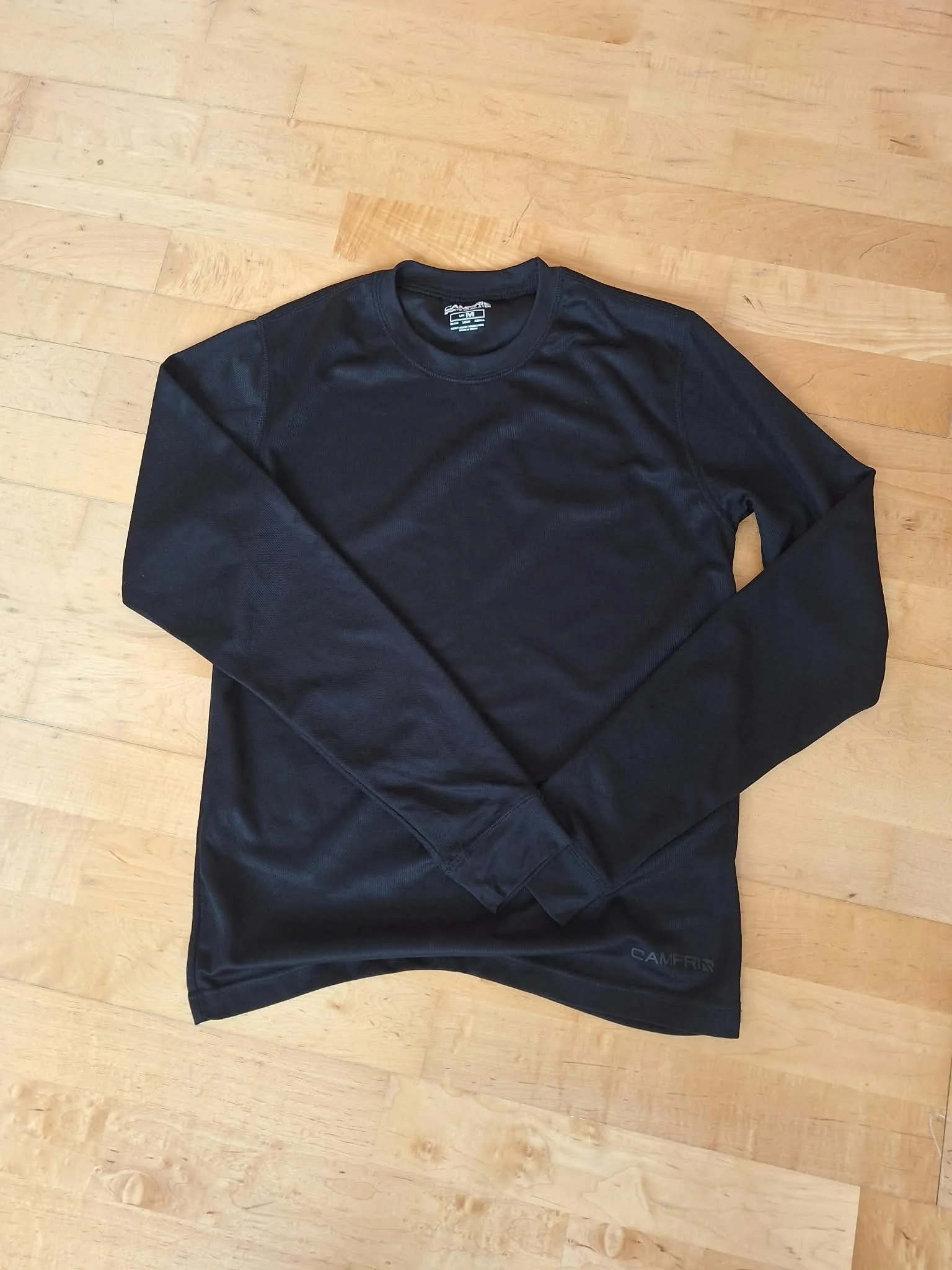
Merino wool 200 base thermal layer. Now, it would want to pretty cold for me to wear this, but like it’s lower half sibling (see icebreaker long john above) , in extreme cold these are the combined long johns you might need to have on.
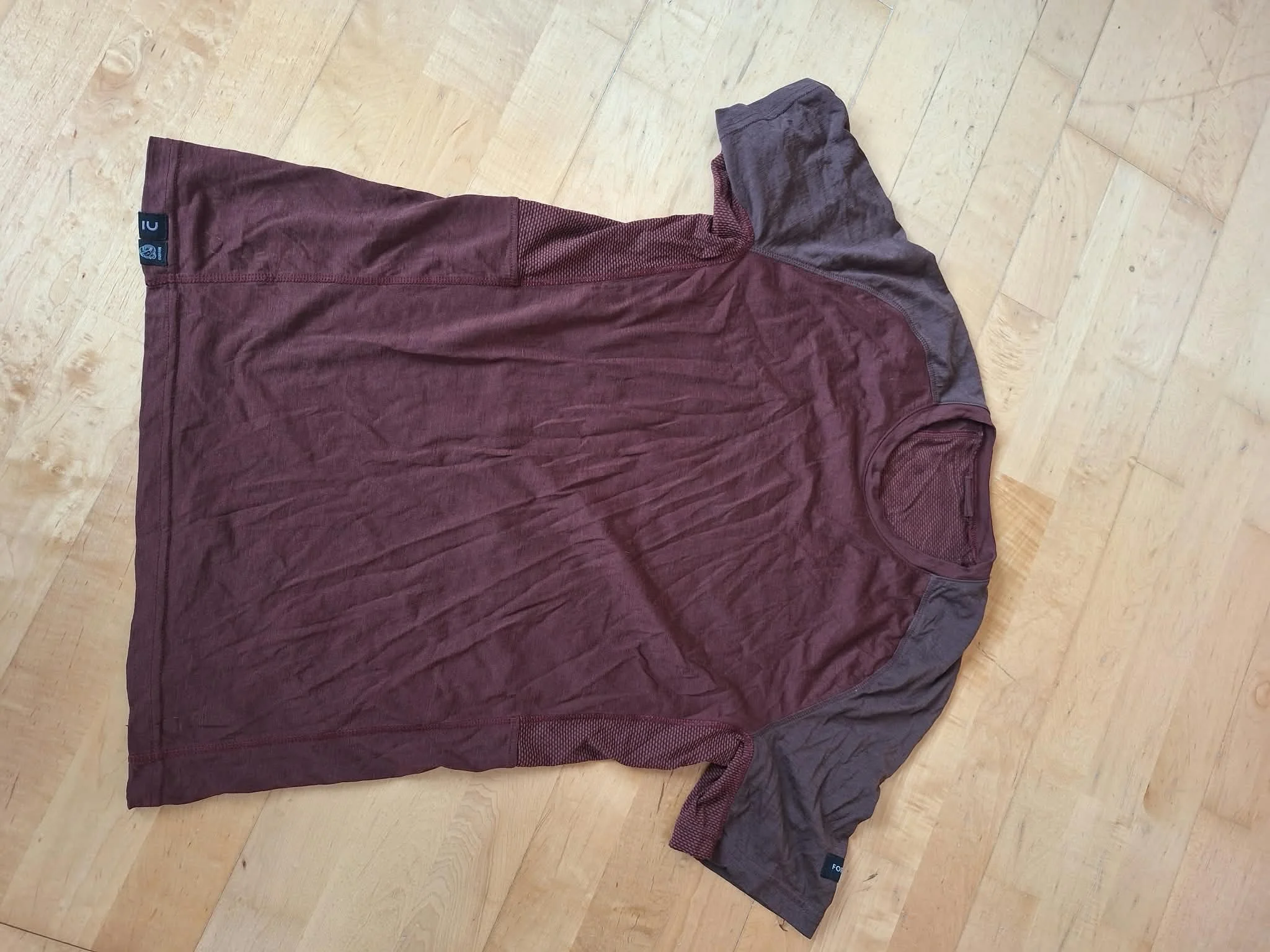
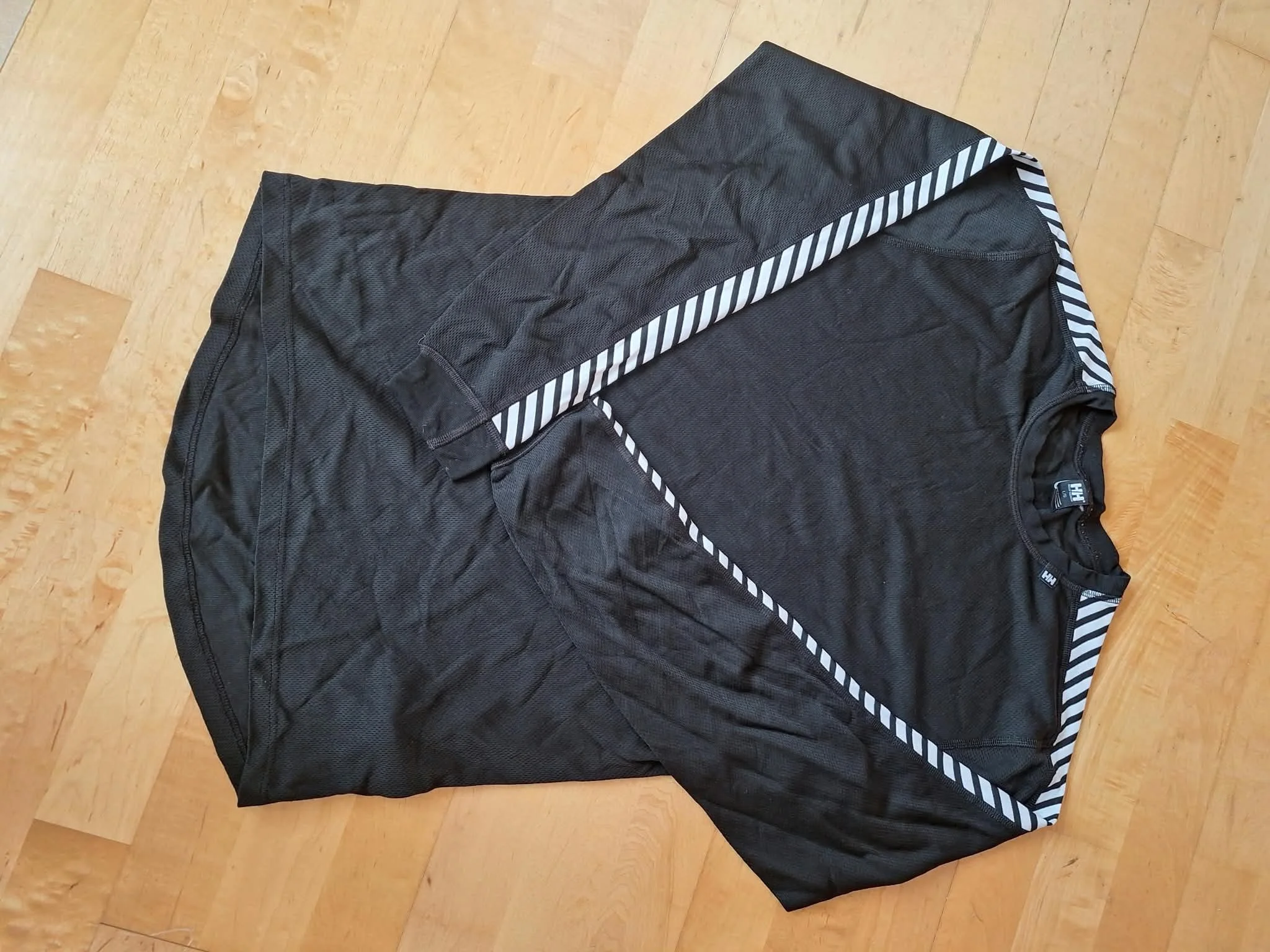
I got lots of these and I also use them when I go skiing - standard non-cotton t-shirts. Usually polyester or nylon. I find running and sports tops great for this as they are breathable, light and dry quickly if they get wet.
Gloves
Well, I have more gloves than Michael Jackson and I tend to feel the cold on my hands and in my fingers, so I tend to go overboard in this department. Nevertheless, my approach is simple - a light glove (often just an inner) when it is cool, a heavier layer with some insulation when it is a bit colder and so on .. as the conditions get colder the level of insulation goes up. Finally, a bit like the upper and lower body layers, I have a hardshell layer that goes over whatever I am wearing for when conditions are particularly tough and demanding. What I find is that everybody is different, particularly in the hand department. You need to find out what works for you. What I will say is that hand warmth can be deceptive owing to how blood circulates in the peripheries. We have all experienced that intense tingle and pain as warm blood permeates cold fingers. My recommendation is get the gloves on way before the hands and fingers start to tighten and get cold to the touch. And leave them on until conditions are safe to remove them.
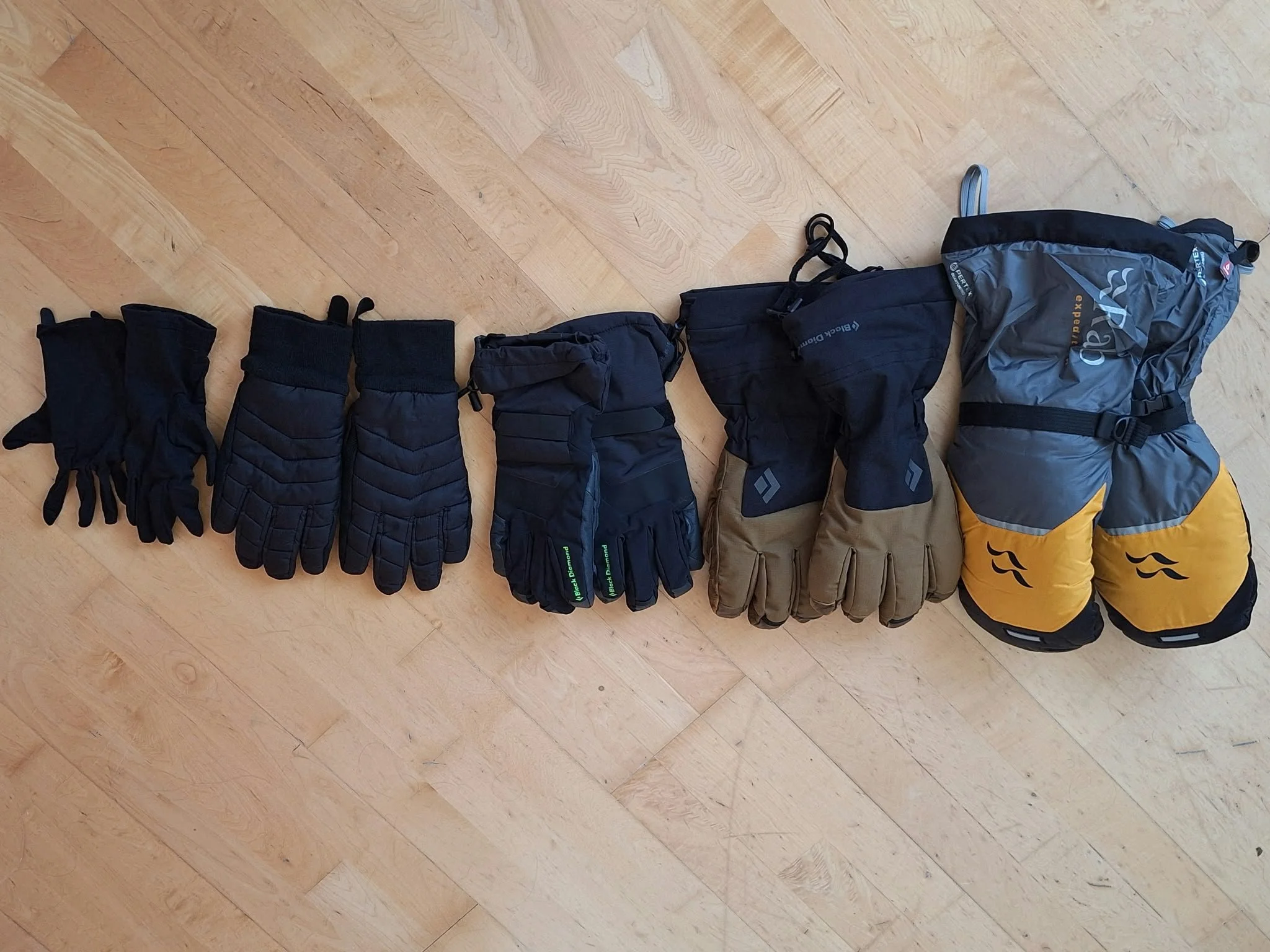
So rather than a picture of every pair of gloves I own, let me walk through the gloves in the top image. Starting at the left end is a pair of liner gloves. These may be silk (posh!) or even better, our old friend merino wool. Yes, these can be worn under the other pairs of gloves, but quite often these will be my go-to gloves when I just need something to keep the hands and fingers warm as there is nip in the air. A pair of cycling gloves can be just as effective here.
Then I have a set of lightly insulated and showerproof gloves - in this case they are Sealskinz (the brand, not the animal!). These are the type of gloves I might wear on a cold day walking the dog in the park. However, they are decidedly effective higher up on the hills before temperatures and wind chill become excessive.
We go up a scale again and I liken these to ski gloves. They should certainly be effective to low freezing temperatures particularly when combined with a pair of inners.
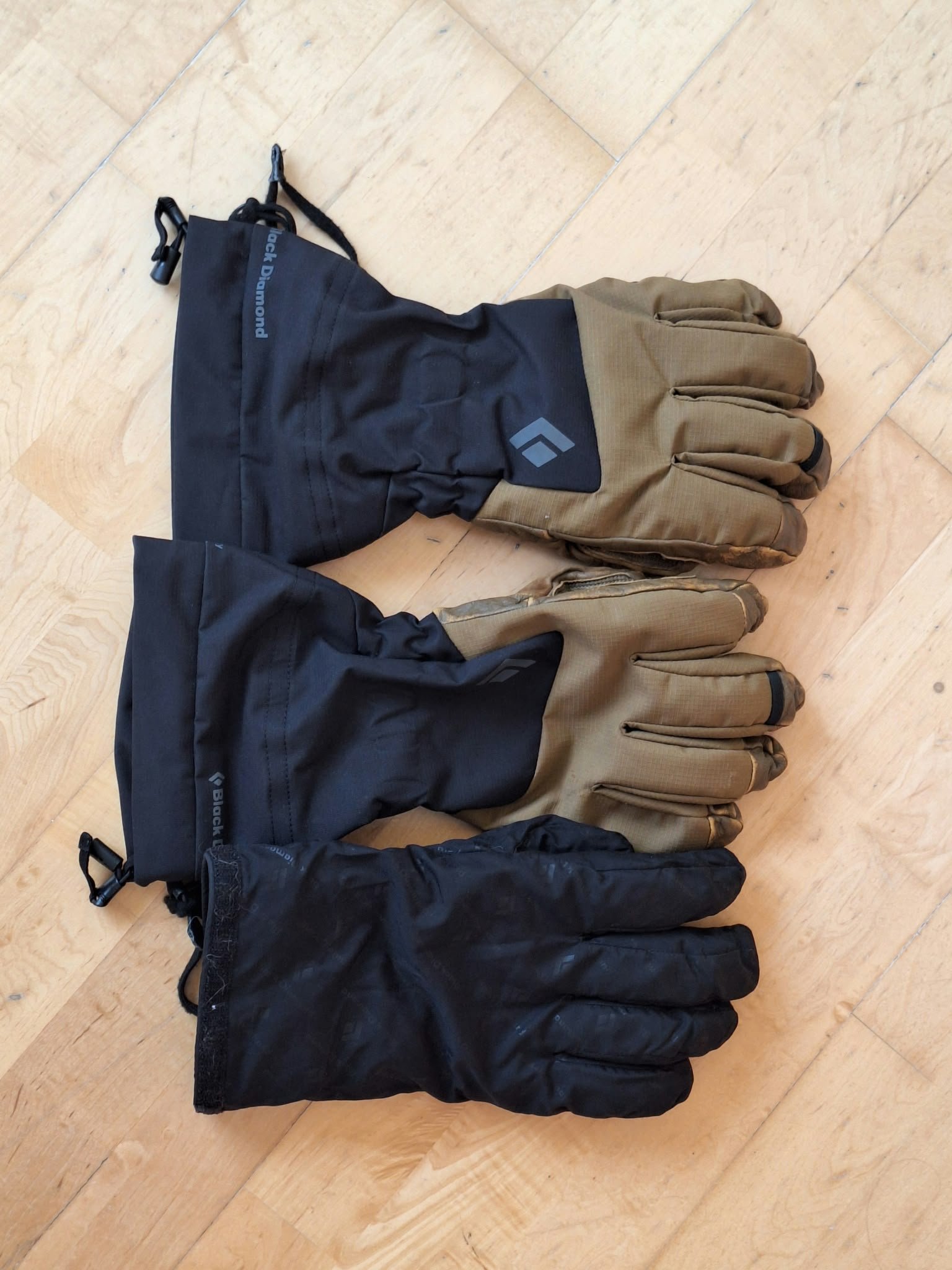
The next pair again is a heavy duty mountaineering glove with a detachable inner (see second image) - mine are Black Diamond. These are a real workhorse and can be used with ropes and jumars also. This pair got me all the way to the top of Island Peak at over 6100m and double-digit below freezing.
Last but not least are the RAB expedition mitts on the extreme right. Well, I have to say that I bought these and have never worn them apart from a few funny pictures. I got them for climbing Island Peak if the weather was particularly cold. They are down mitt for 8000m situations or crossing the Polar ice caps - neither of which I will ever be doing.
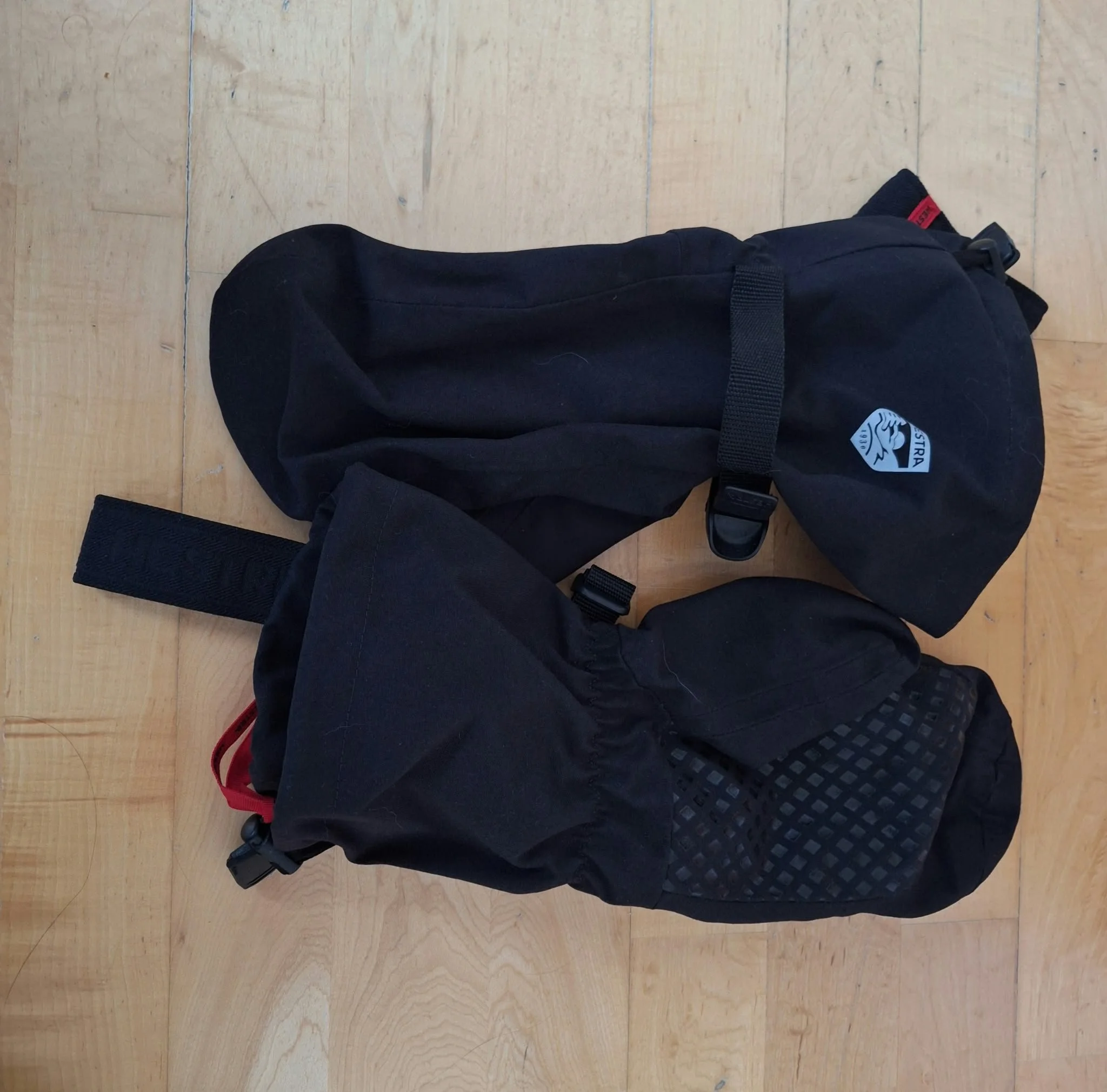
Lastly, and I nearly forgot - my hardshell pull-over mitt from Hestra (final picture). These are a total weatherproof layer that slip on over any of the other gloves I have mentioned to give the ultimate protection from wind, cold and wet. They pull up over jacket sleeves to make sure there are no gaps. Never worn them but I always bring them on high-altitude trips!
You can see some of the gloves have wrist attachments .. have to say I am a big fan of these particularly for the high altitude gloves. You lose a glove high-up and you are in trouble. All my gloves, from the ski gloves up to the mitts and even the pull-over mitts all have wrist straps attached.
Accessories
There is a never ending list of accessories and bits ‘n’ bobs that you can bring into the outdoors with you and what you require really depends on what you are doing, where you are going and what the prevailing conditions are. Anyway, below is some information regarding the accessories that I have and that normally come along into the outdoors with me. I am not including anything specific that I use as a leader by the way and the information on my first-aid pack reflects what I need as an individual rather than a guide or leader.
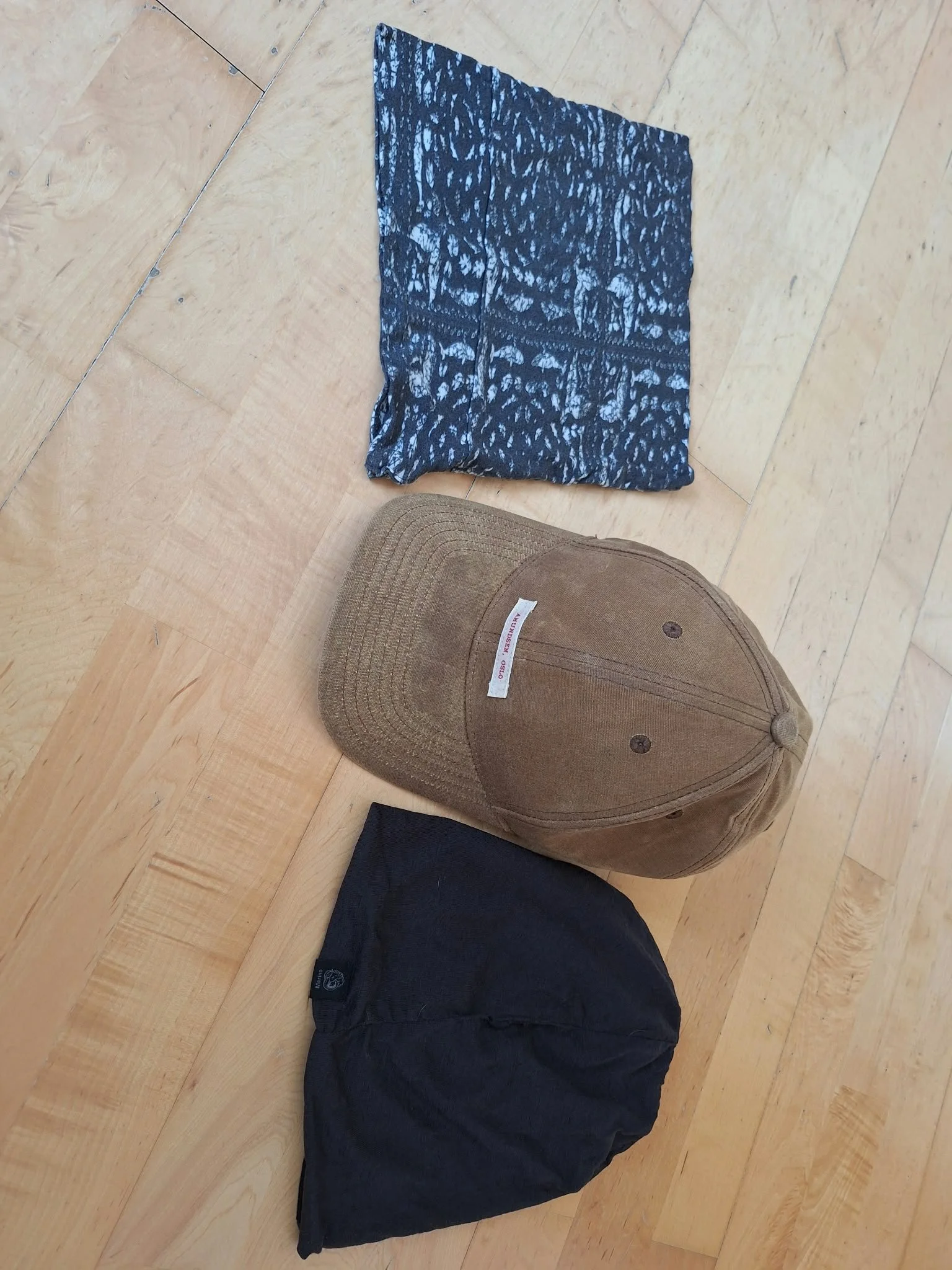
Always in the bag .. a buff. Always on my head .. a baseball cap. Always nearby .. a warm hat (you might want to consider an insulated one).
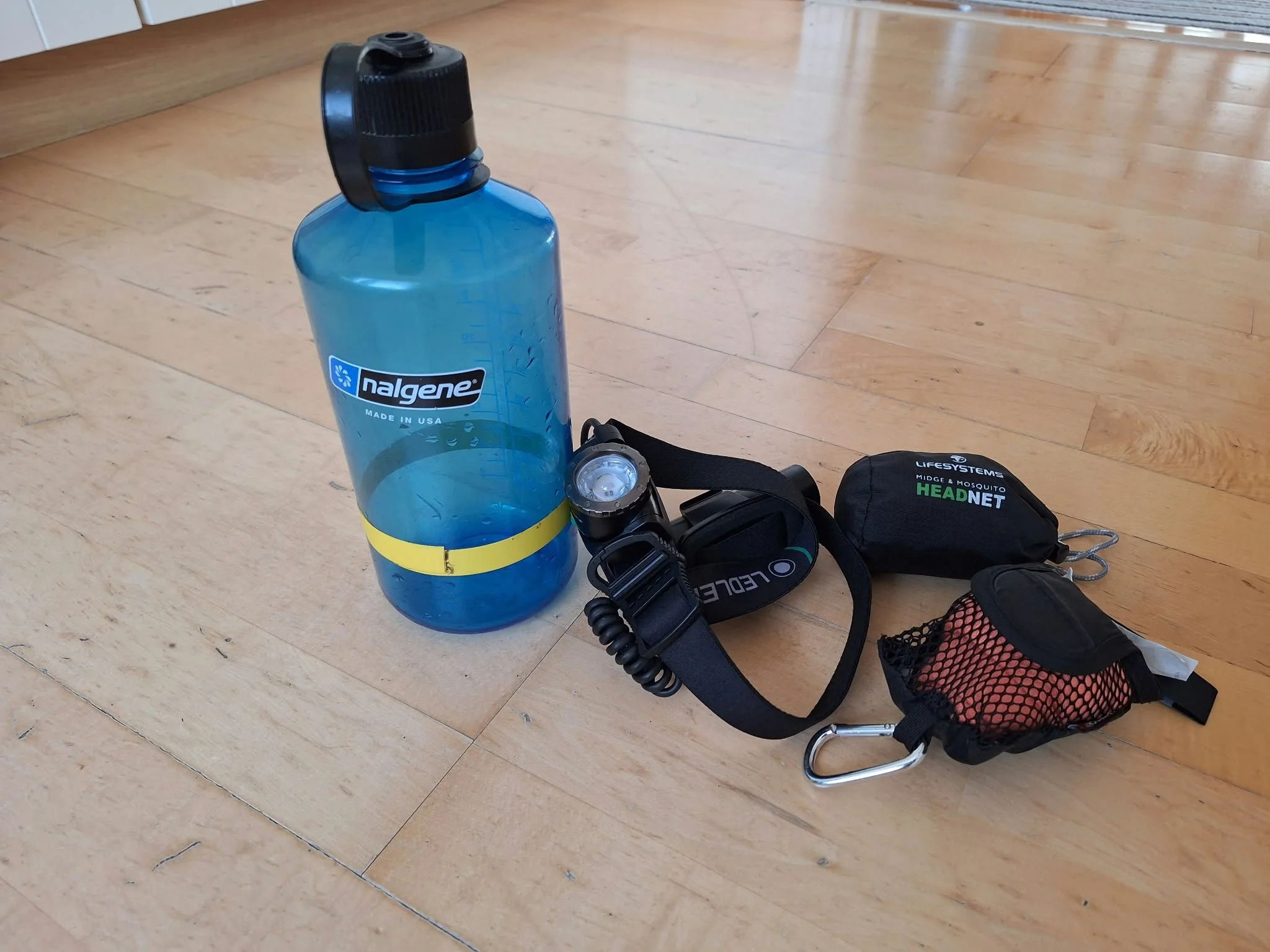
Water is so important. We generally are always dehydrated - we should all be drinking more water. This is even truer in the outdoors - hot days, altitude, effort all play their part in dehydrating us. I use Nalgene bottles or my liquids - they are almost indestructible and can also act as hot water bottles at high-altitude - I have done this on Kilimanjaro and Island Peak. Some folk prefer bladders in the backpack, but they are susceptible to the pipe freezing or even worse, leaking in your bag! Each to their own.
Charged headtorch is always in my bag. In Winter and poor conditions, dusk and night can fall upon us early and quickly so useful to have to see and in worst case use as a signal.
I always have a minature towel and depending on the location and season a mosquito/midge head net.
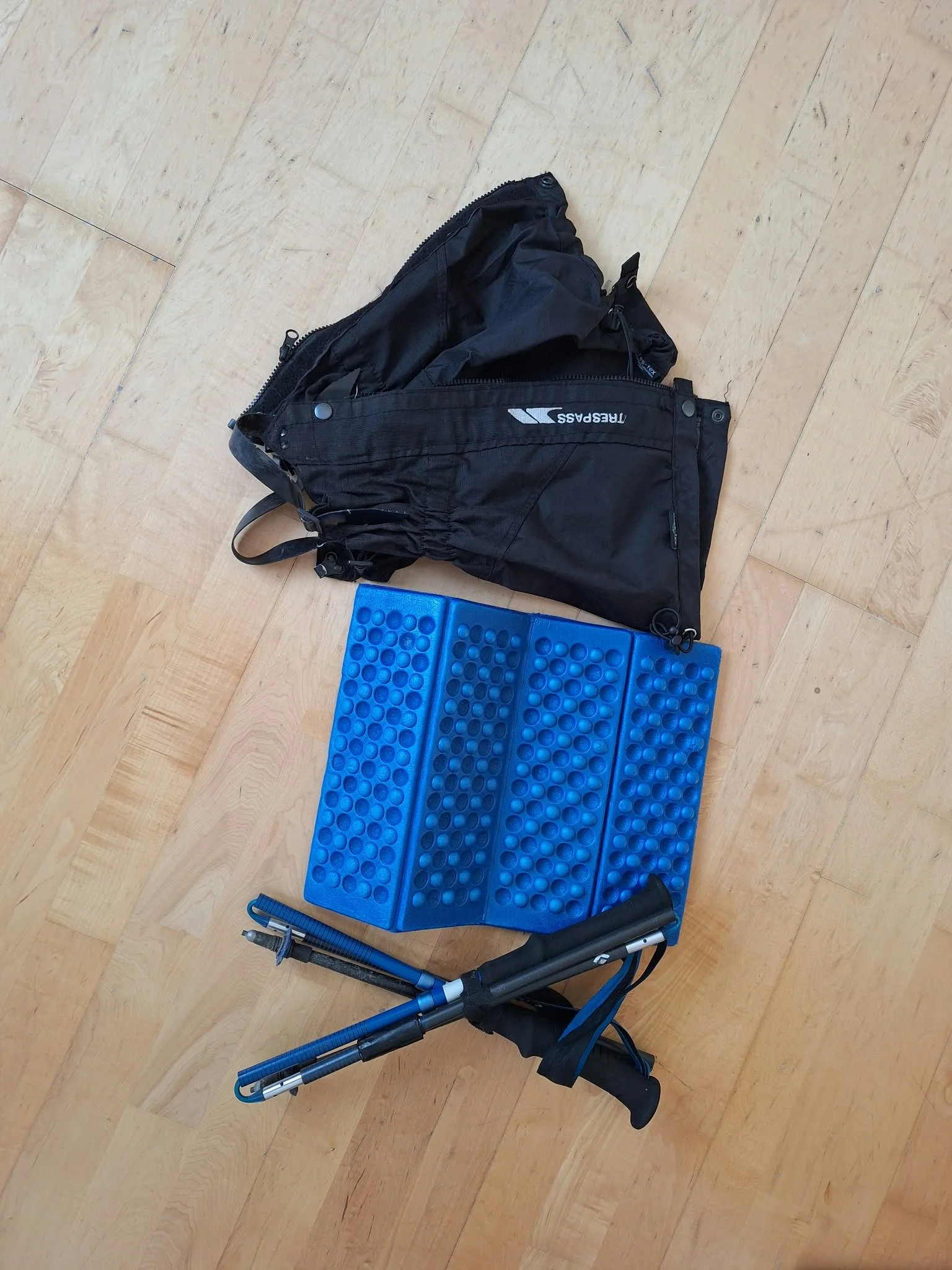
I always trekking poles - mine are a set of ultra-light, foldable Black Diamond ones. I find them great om descents when there is a lot of steepness or boulders to cross. Also useful to give one to another person as a confidence tool.
Foam seating mat - I am sure this cost me about €2 in Decathlon. Useful for when you want to take the weight off your feet but don’t want to sit directly on the cold and damp ground.
Gaiters - I will always have them in the boot of the car, but as to whether I wear them depends on the conditions. It is often quite wet and boggy where I hike and in Winter are almost a necessity. Just help keep the feet free from debris, mud, bog and water - though it does always seep in somehow!
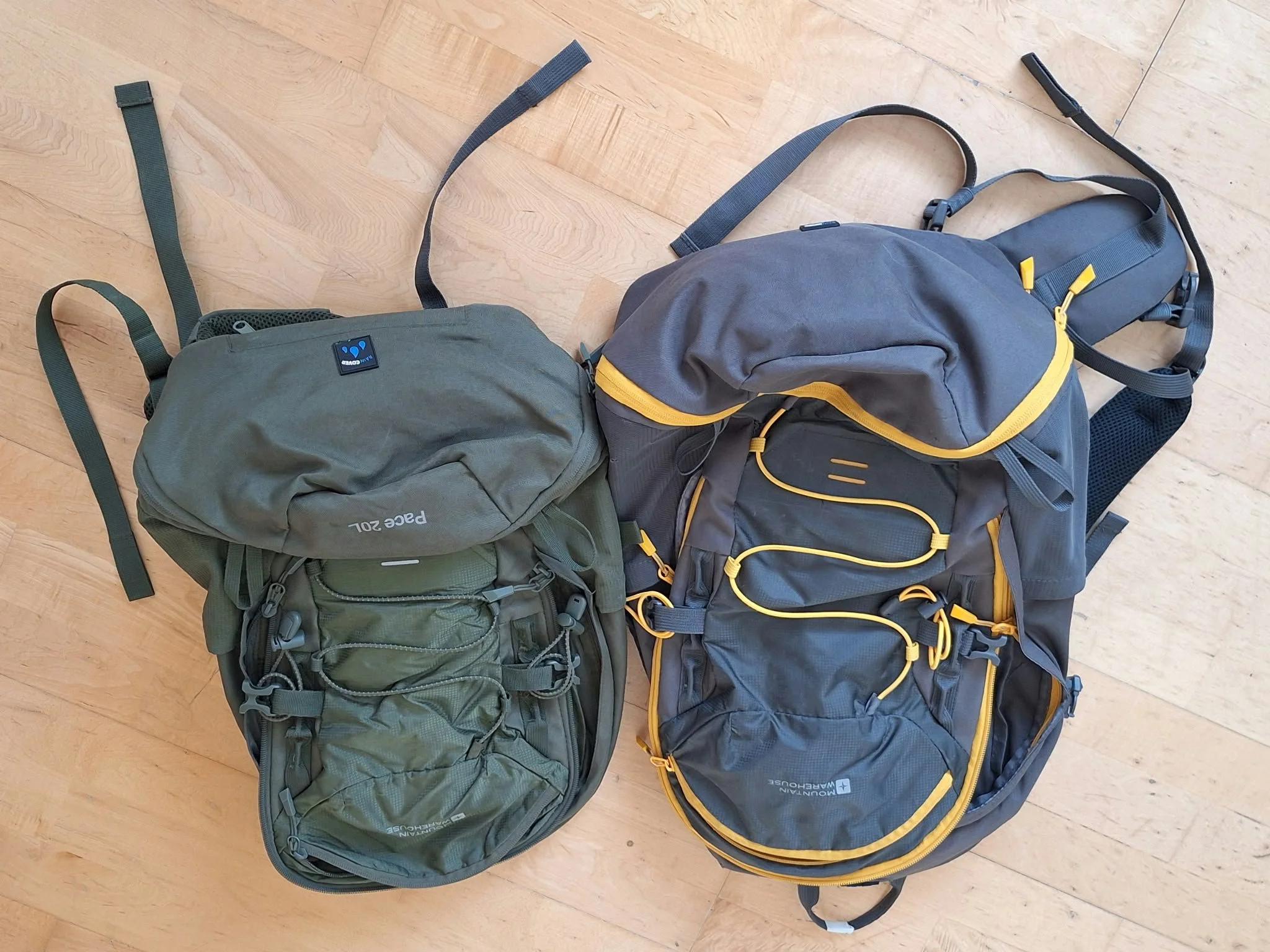
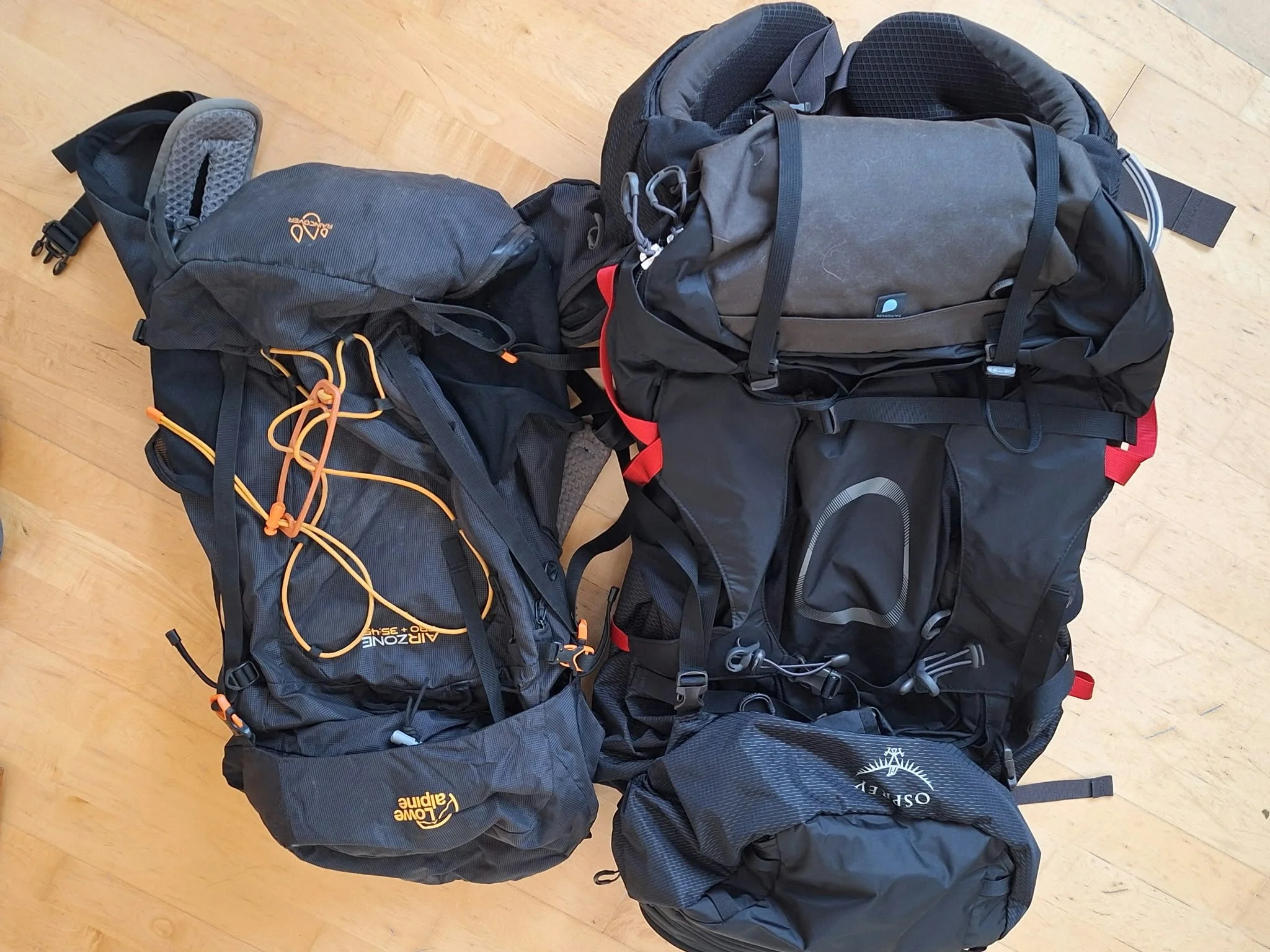
A backpack or rucksack for every occasion! The 30L PACE bag from Mountain Warehouse is my workhorse and comes with me on most day hikes - it is amazing what you can fit in here. The 20L I rarely use now, I just bring too much stuff! The 45L Lowe Alpine is extendible to 55L and has done me well on multi-day treks to Kilimanjaro, Atlas mountains and Island Peak. The 70L Osprey is the new kid on the block, bought for camping expeditions when I will have my house on my back for a few days. I haven’t used this of yet, but plan to in the next few months. All are bladder compatible, with padded shoulder straps and aerated spinal design. I would always recommend a visit to your local outdoor shop to get a backpack properly fitted and adjusted to your body. Makes all the difference.
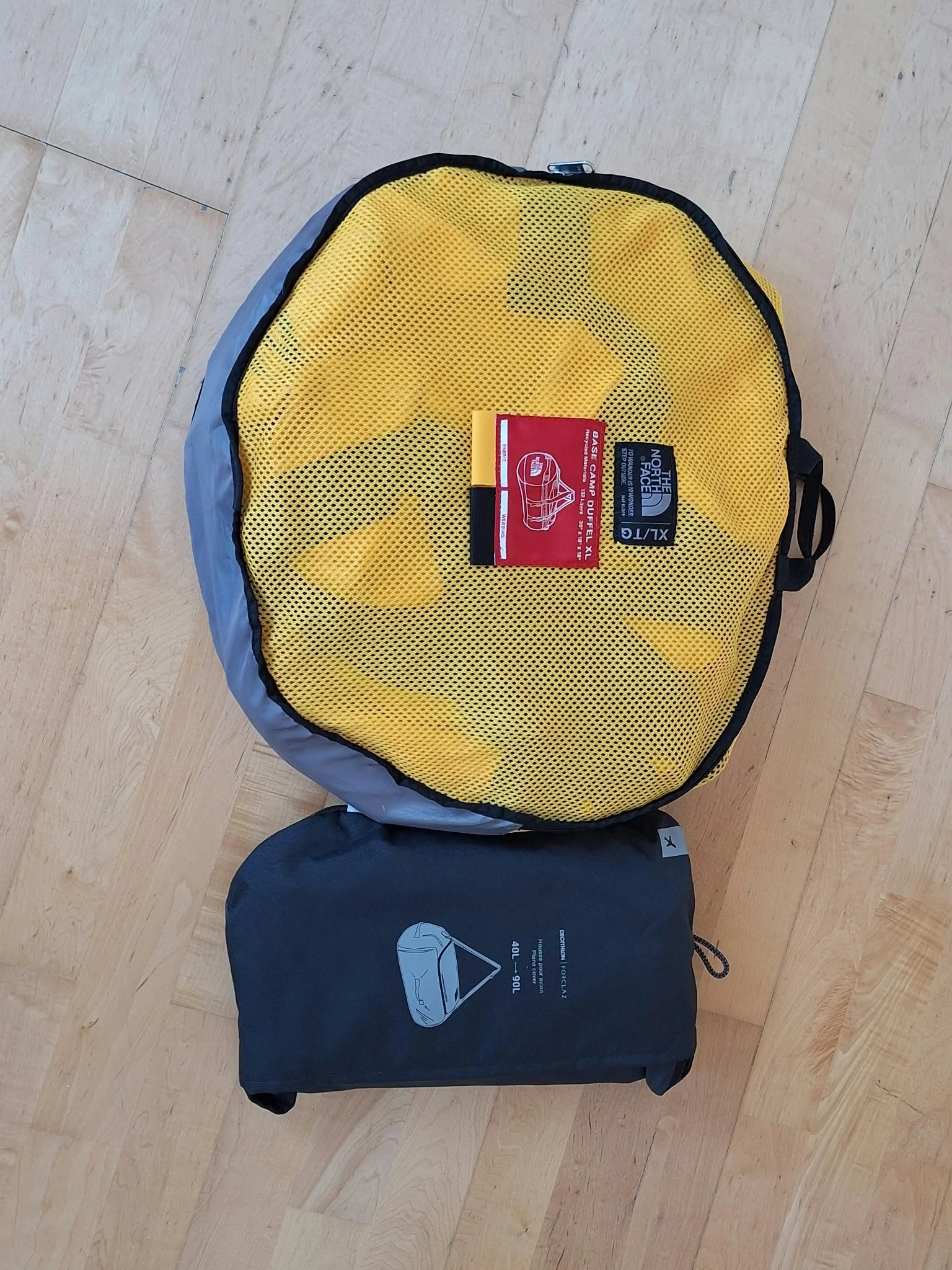
On the left is a duffel bag in it’s cover. This one is a whopping 132L so you can fit pretty much all your gear in one bag when travelling. They are robust and sturdy - just as well as they get lots of abuse and they should be waterproof. Ideal for expeditions when the bags are being transported by human, donkey, horse or yak! Also useful at home for storage of your hardware. On the right is a light bag I picked up in Decathlon into which you can put your rucksack when travelling, particularly by plane. It keeps all the straps nicely tucked away and offers a degree of protection. Nice to have rather than a must have!
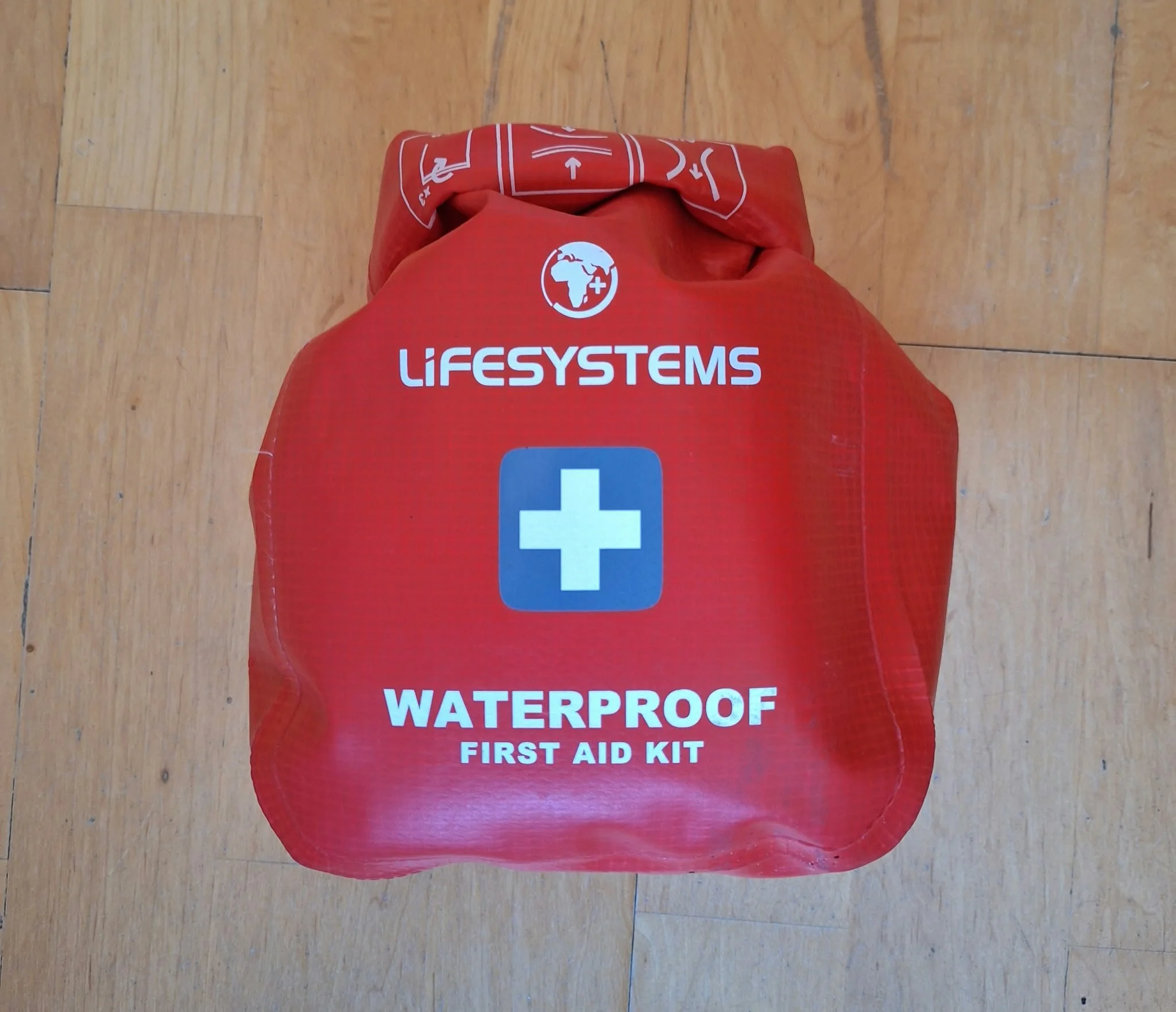
First aid kit - what do you need! Well you don’t need all the stuff I have I imagine! So, leaving aside the stuff that I bring as a Lowland Leader/Tour Guide, as a participant I would have the following: Plasters, blister plasters, hand sanitiser, alcohol wipes, pain killers (paracetamol, ibuprofen), personal medications, insect bite cream, sports tape, tweezers and a small scissors. You don’t need the fancy waterproof bag I have - a simple plastic bag is just as effective. Have it easily accessible in your rucksack.
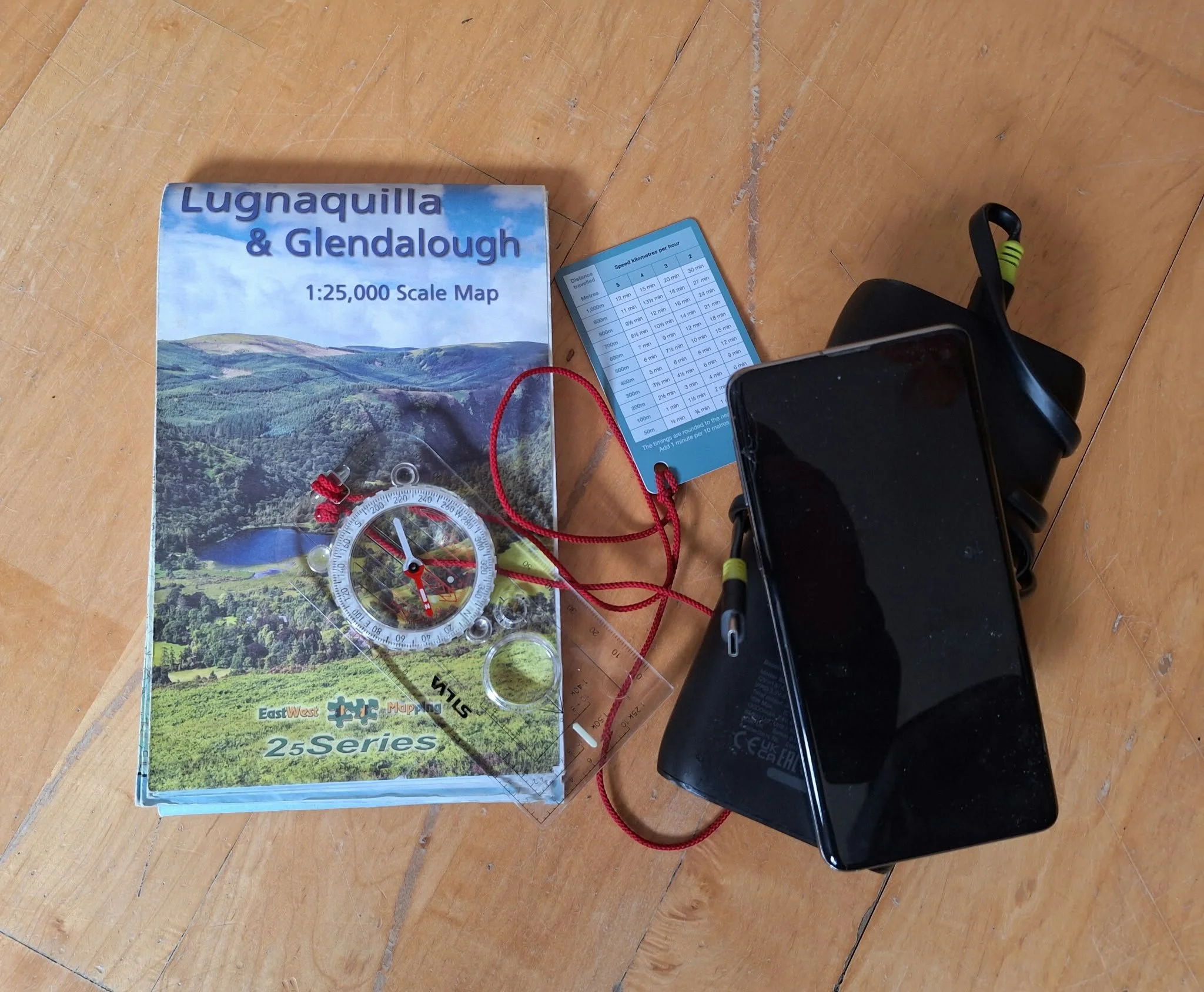
Map, compass, mobile phone and power bank. I can feel the traditionalists already getting uptight! The mobile phone is a fantastic tool for taking photos, videos, communication and navigation. When you have a phone, you should bring along a fully charged power bank. It is argued in many places elsewhere as to whether the phone has any place in navigation. Do you need a map and compass? well, if you know how to use them then bring them along. But let’s face it, most hikers have no idea how to use them and so they are of little value. If you are leading then, yes, you need them.