

Dublin Mountain Tombs
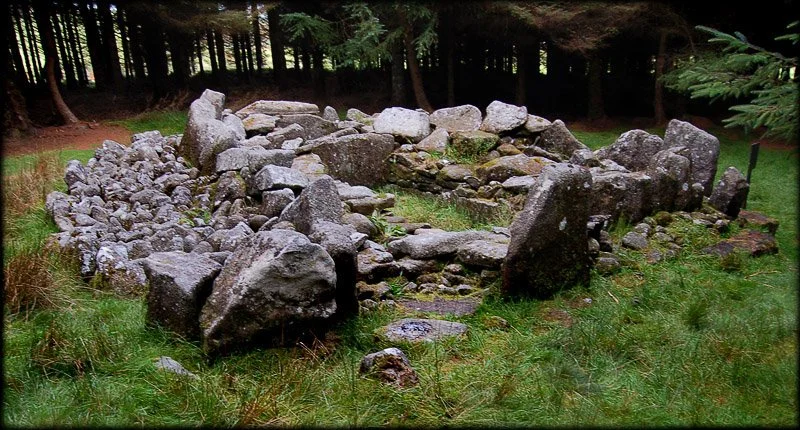
Ballyedmonduff Wedge Tomb, Glencullen, Co. Dublin, Ireland
If you spend much time walking in the Dublin Mountains, sooner or later you'll come across a pile of stones. Most of the time, that's exactly what it is. But occasionally you're looking at something that's been sitting on that mountainside for thousands of years.
Long before Dublin had Vikings, Georgian streets or Guinness, people were living, farming and burying their dead in these hills. And they left behind a surprisingly rich prehistoric landscape of passage tombs, wedge tombs, cairns and ancient burial places.
Fairy Castle – older than the pyramids
One of the best known is Fairy Castle, the huge cairn on the summit of Two Rock Mountain.
Thousands of walkers pass it every year, many probably assuming it's simply a big pile of rocks beside the trig point. But the cairn is believed to contain a Neolithic passage tomb, probably dating from somewhere around 3500–3000 BC. It has never been excavated and there is something nice about that.
Stand there looking across Dublin Bay and consider that for a moment.
People were climbing this mountain and building monuments here more than 5,000 years ago.
Tibradden – a grave with a view
Follow the Dublin Mountains Way west and you'll encounter another prehistoric monument near the summit of Tibradden Mountain. The cairn was excavated in 1849 and contained a stone-lined grave, or cist, together with cremated human remains and a Bronze Age pottery vessel. Interestingly, the cairn we see today isn't entirely original. It was reconstructed during the 1950s following those earlier excavations - to be honest, they made a bit of a haems of it!
Look east from Tibradden and you can see Fairy Castle. Look northwest and you'll see the Hell Fire Club – itself built close to the location of prehistoric tombs. You quickly begin to wonder whether these places were deliberately connected across the landscape.
The Giant's Grave
Drop down towards Glencullen and there's another wonderful site at Ballyedmonduff. Known locally as the Giant's Grave, this is a wedge tomb dating from roughly 2500–2000 BC. When excavated in 1945, archaeologists discovered cremated remains, flint, decorated Beaker pottery and a stone macehead. Today it's surrounded by trees, but when originally constructed there would have been sweeping views across the mountains, including towards the Great Sugar Loaf.
And there are plenty more…
Walk around Kilmashogue and you'll find another wedge tomb, close to the Wicklow Way. Another survives in Massy's Wood. For something a little more adventurous, head further into the mountains to Seahan. At 647 metres, Seahan requires considerably more effort, but the reward is extraordinary: prehistoric passage tombs sitting high on the summit, probably constructed around 3500–3300 BC. One has lost much of its covering cairn, meaning you can actually see the passage and burial chamber that would once have been hidden beneath thousands of tonnes of stone.
And there are more prehistoric sites scattered around Slievethoul, Lugg, Rathmichael and the Hell Fire Club area. Once you start looking for them, the Dublin Mountains begin to feel very different. They weren't an empty wilderness beyond ancient Dublin. They were a landscape that mattered - people lived here, buried their dead here and constructed monuments on prominent mountains that could remain visible for generations.
So next time you're out walking and come across a suspicious-looking pile of stones, give it a second glance.
Want to explore further?
A few excellent resources can help you uncover more of Dublin's prehistoric landscape.
National Monuments Service – Historic Environment Viewer
This is the serious one. It's a free interactive map showing recorded archaeological monuments throughout Ireland. Zoom into the Dublin Mountains and you'll discover just how much archaeology surrounds our walking routes.
Explore the Historic Environment Viewer
Dublin Mountains Partnership – Archaeology
Probably the most accessible starting point for walkers. It has excellent background information on places including Fairy Castle, Tibradden, Ballyedmonduff, Kilmashogue and Seahan, alongside information about walking routes and recreation sites.
Explore Dublin Mountains archaeology
Heritage Ireland
Useful for National Monuments such as Tibradden, with straightforward descriptions of their archaeology and history.
Heritage Ireland – Tibradden Cairn
One final thought: these monuments have survived for thousands of years. Enjoy them, photograph them and wonder about the people who built them – but leave the stones exactly where you find them.